
Çentik vs Lightspeed: The Quick Verdict
Choose Çentik if your main objective is to introduce digital loyalty while keeping your existing point-of-sale system. Its NFC and QR workflows support both count-based rewards and loyalty balances, with a customer experience that does not require downloading a dedicated app. Choose Lightspeed if your business needs a broader operational platform combining checkout, payments, inventory, commerce reporting, and customer engagement. Lightspeed's retail loyalty is connected to its POS environment, while its Advanced Marketing offering adds more sophisticated customer segmentation and marketing workflows. These products are not equivalent substitutes for every use case: Çentik is a focused loyalty platform, whereas Lightspeed is a larger commerce system.[1][3][5][6]
Feature Comparison: Çentik vs Lightspeed
| Criterion | Çentik | Lightspeed |
|---|---|---|
| Primary product | Standalone digital loyalty and customer retention | POS, payments, commerce management, and integrated customer engagement |
| Best-fit business | Cafes, restaurants, and other repeat-visit businesses seeking dedicated loyalty | Retailers and hospitality operators seeking integrated commerce operations |
| First-location software pricing | $19.99/month for Çentik Pro | Retail POS Basic listed at $89/month; other plans and configurations vary |
| POS replacement | Not required for the core standalone loyalty workflow | Lightspeed POS is the operating environment for its native retail loyalty features |
| Customer interaction | NFC tap, QR scan, and browser-based loyalty access | POS-linked customer accounts and transaction-based loyalty workflows |
| Physical NFC touchpoint | Dedicated NFC Damper | A comparable dedicated NFC loyalty device is not established by the reviewed product documentation |
| QR loyalty | QR-based earning, including a QR code displayed by the counter interface | Not established as an equivalent standalone QR earning workflow |
| Count-based rewards | Supported | Points and spending-based rewards are documented; a directly equivalent visit-count program requires confirmation |
| Balance-based rewards | Supported through configured NFC or QR earning | Cash-back-style retail loyalty balances are documented |
| Automatic transaction-linked earning | Optional POS-amount-based QR earning flow; universal POS synchronization is not established | Native transaction-linked earning within supported Lightspeed Retail workflows |
| Customer segmentation | Customer management and retention analytics | Advanced Marketing documents purchase-based segmentation and automated campaigns |
| Email and SMS automation | Specific automation capabilities and message costs require confirmation | Documented within Lightspeed Advanced Marketing |
| Payment processing | Not a payment-processing replacement | Integrated payment-processing solutions |
| Inventory management | Not a core inventory-management platform | Retail and restaurant inventory-management tools |
| Online commerce | Customer-facing loyalty and related business tools | Retail eCommerce and restaurant ordering capabilities |
| Multi-location operations | Multi-location loyalty management | Multi-location commerce and operational management |
| Implementation emphasis | Introduce a focused loyalty program around existing counter operations | Configure an integrated POS and commerce environment |
Important distinction: Lightspeed operates several product lines, including Retail X-Series, Retail R-Series, and Restaurant. Capabilities, plan eligibility, and marketing integrations should not be assumed identical across those products. The Lightspeed loyalty and marketing features discussed below are primarily supported by its published Retail documentation.[3][4][5][6][7][8]
What Is Çentik?
Çentik is a digital loyalty platform designed to help businesses turn occasional customers into returning customers. Instead of centering the experience on a complete replacement POS, it provides in-store loyalty interactions using NFC and QR codes. Businesses can configure count-based earning, such as progress toward a reward after a number of qualifying interactions, or balance-based earning. Customers can participate through the browser without a mandatory dedicated-app download.
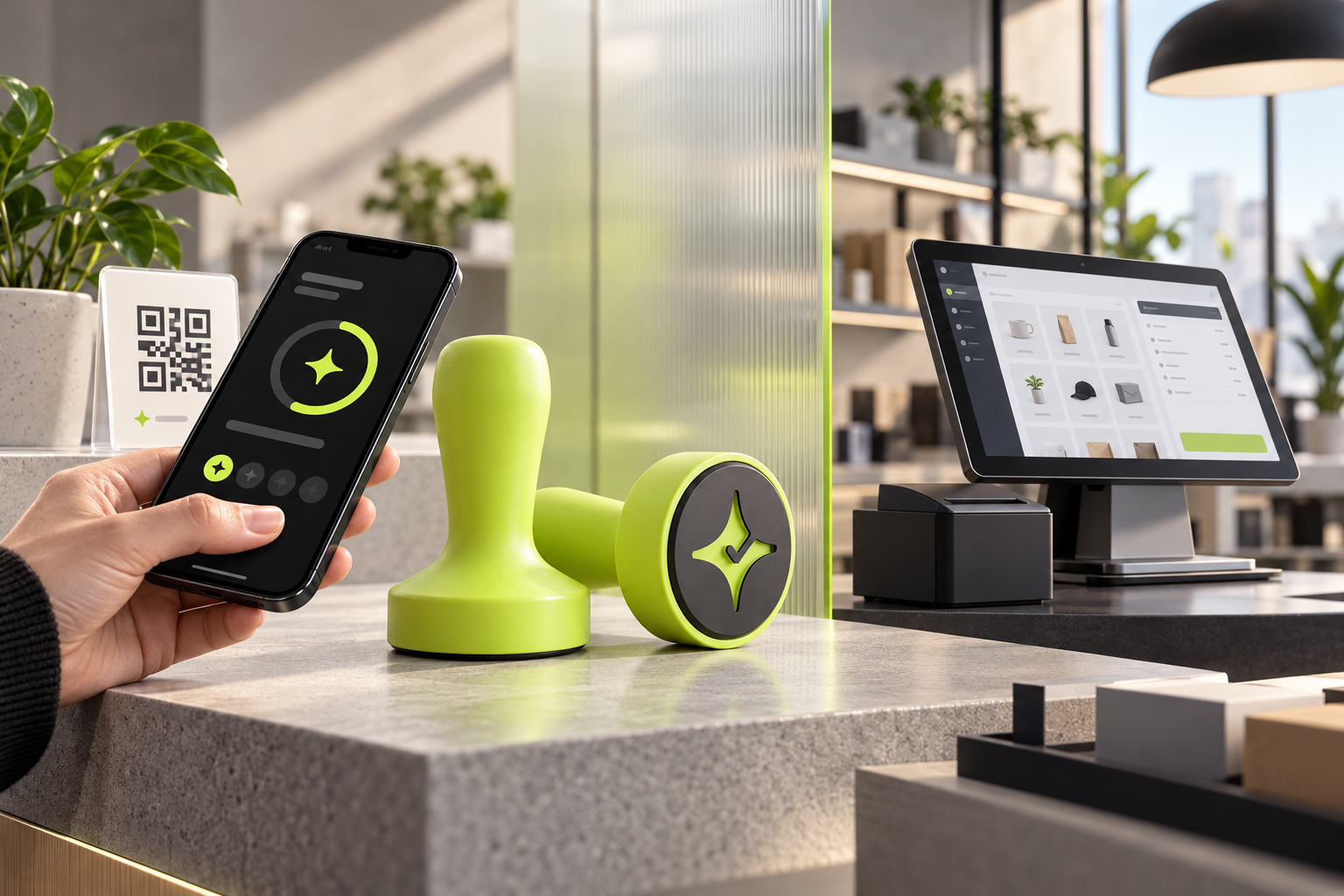
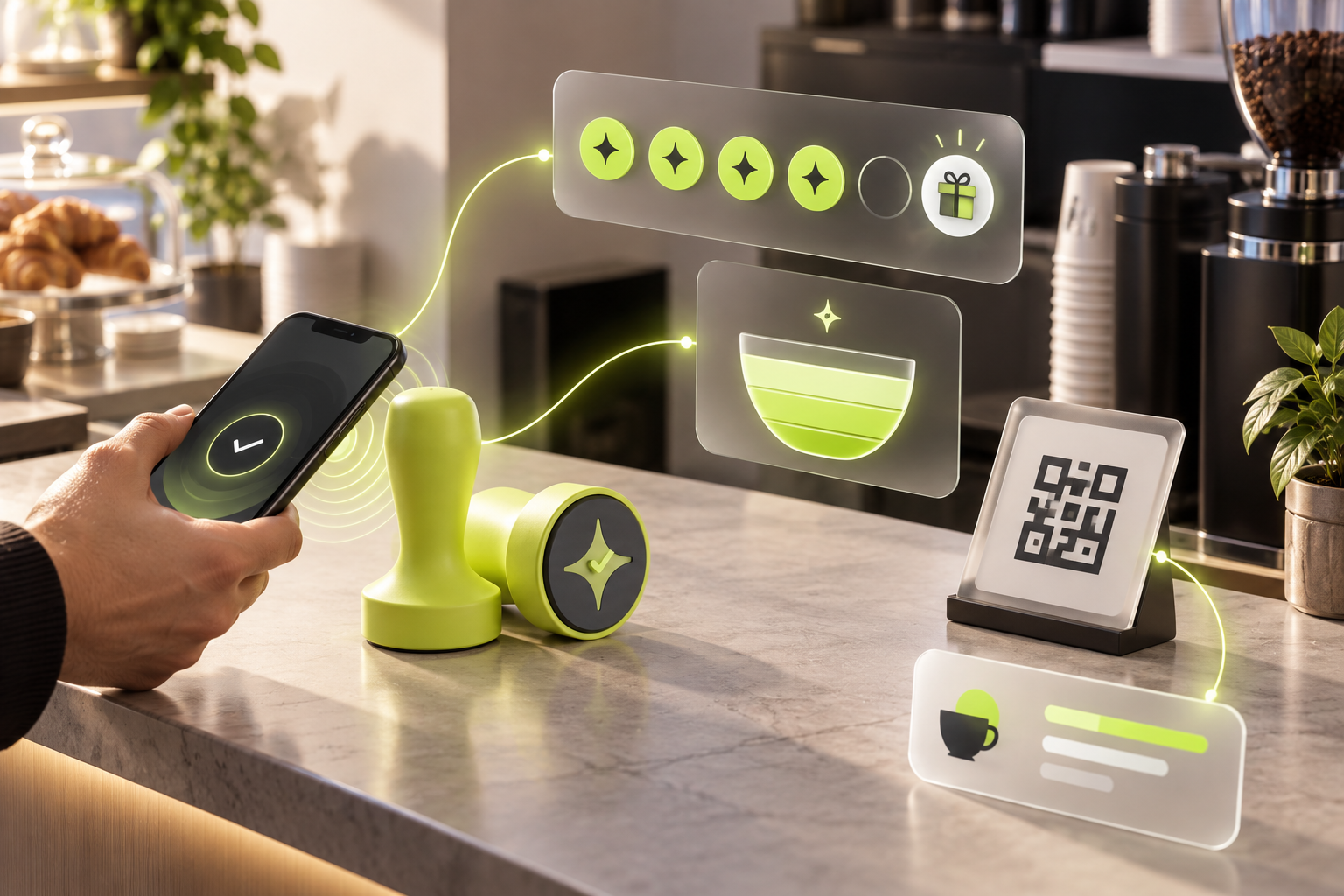
At the counter, a customer may tap the NFC Damper or scan a QR code. The counter interface can also display a QR code that grants a count or loyalty balance. Where configured, the balance credited through that QR workflow can be based on an amount received from the POS. This does not imply that every POS model is compatible or that transactions synchronize automatically across all systems. Businesses should confirm their intended equipment and checkout workflow before deployment.
Where Çentik Stands Out
- Standalone loyalty approach: introduce a repeat-visit program without making a POS migration the starting requirement.
- NFC and QR earning: customers can interact with a physical NFC touchpoint or a QR code.
- Two reward models: configure count-based progress or balance-based rewards rather than relying exclusively on digital stamps.
- Counter-friendly operation: display a QR code through the counter interface, with optional amount-based balance calculation when configured.
- Accessible entry price: Çentik Pro costs $19.99 per month for the first location.
- Customer retention focus: manage customer relationships, campaigns, and repeat-visit information.
Çentik's Limitations
Çentik should not be mistaken for a complete retail or restaurant operating system. It does not replace the operational scope of a POS platform covering payment acceptance, detailed inventory workflows, complex purchasing, and broader commerce administration. Its QR and NFC earning options also require clear operational rules around customer identification, reward eligibility, amount entry, and redemption approval. A merchant that depends on automatic transaction-to-loyalty posting should validate the exact integration path rather than assume it is available.
What Is Lightspeed?
Lightspeed Commerce is a publicly listed commerce technology company serving retail, hospitality, and other business categories. Its platform combines point-of-sale software with capabilities such as payments, inventory, commerce reporting, and customer management. Lightspeed Retail includes in-store and online loyalty functionality, while its Advanced Marketing offering extends customer engagement through segmentation, marketing automation, and more configurable loyalty options. Lightspeed Commerce Inc. trades on the New York Stock Exchange under LSPD.[1][2][3][5][9][10]
Lightspeed Retail Loyalty and Advanced Marketing
Lightspeed's Retail X-Series documentation distinguishes built-in loyalty from Advanced Marketing. The basic loyalty functionality supports cash-back-style earning, where eligible spending generates a configurable store loyalty balance. Advanced Marketing adds points-based earning, customer segmentation, automated emails, birthday offers, lapsed-customer promotions, referral incentives, and adjustable loyalty tiers. The advanced product connects to Retail POS, allowing merchants to work with customer rewards in the existing retail checkout environment.[5][6]
Lightspeed Retail R-Series also documents an Advanced Loyalty and Marketing offering powered by Marsello. Its capabilities and setup process should be evaluated separately from X-Series rather than treated as a universal Lightspeed feature bundle. The relevant subscription, POS version, and marketing configuration determine what a merchant can use.[8]
Where Lightspeed Stands Out
- POS-linked loyalty: customer earning can be connected to transaction activity within supported retail workflows.[5]
- Broader commerce operations: payments, inventory, and sales reporting are available within the Lightspeed ecosystem.[1][3][4]
- Advanced marketing tools: documented customer segments, email campaigns, referrals, and loyalty tiers.[5][6]
- Retail specialization: product, inventory, and multichannel commerce tools support merchants managing a larger operational workload.[3]
- Multi-location capabilities: Lightspeed supports businesses operating across more than one location, with configuration and pricing dependent on the selected product.[2][3]
Lightspeed's Limitations for Loyalty-Only Buyers
Lightspeed may be a broader investment than a merchant needs if the existing checkout system is satisfactory and the immediate goal is simply to introduce customer rewards. Its native retail loyalty experience is associated with its POS environment, and more advanced marketing functionality depends on the relevant offering and subscription. Businesses should confirm eligibility, onboarding requirements, costs, and whether their chosen Lightspeed product supports their desired earning rules. These considerations do not make Lightspeed inferior; they reflect its wider operational scope.[3][5][6]
NFC, QR Codes, and POS-Based Rewards: How the Workflows Differ
The central difference is where the loyalty interaction begins. Çentik makes customer-facing NFC and QR interactions the entry point. Lightspeed Retail starts from a commerce system that already understands the transaction and associated customer account. Both approaches can support repeat purchases, but they create different responsibilities for cashiers, customers, and business owners.
Example 1: A Coffee Shop Using Count-Based Rewards
A coffee shop could configure a Çentik campaign that rewards customers after a specified number of qualifying purchases or interactions. A participating customer taps the NFC Damper or scans the displayed QR code to receive the configured count. The customer can review progress through the digital loyalty experience. Staff should follow the merchant's verification and redemption rules when awarding benefits. This is a count-based example, not a claim that every NFC touch automatically proves a completed purchase.
Example 2: A Restaurant Using Balance-Based Rewards
A restaurant might prefer a balance-based model instead of counting purchases. In Çentik, the merchant can configure earning through NFC or QR. The counter interface can display a QR code that grants the specified balance, and an optional configuration can calculate the balance from an amount received from the POS. The supported amount source and process must be validated for that restaurant's actual checkout setup. No particular currency, automatic payment capture, or universal POS integration should be inferred.
Example 3: A Retail Store Using Lightspeed
A retailer using a supported Lightspeed Retail setup can award loyalty through its POS-linked customer and transaction workflow. With Advanced Marketing, that retailer can also configure spending-related customer segments and automated engagement campaigns. This may be particularly useful where purchase history, inventory, and customer marketing need to operate within connected retail systems.[5][6]
Çentik vs Lightspeed Pricing in the United States
Çentik Pro costs $19.99 per month for the first location. Lightspeed pricing needs more context because the company sells comprehensive POS systems rather than a single standalone loyalty product. Its published US Retail X-Series pricing page lists Basic at $89 per month, Core at $149 per month, and Plus at $289 per month in the displayed pricing configuration. The page also provides billing and payment-related options and warns that pricing and service fees can vary. These figures describe retail POS plans, not separate loyalty-only subscriptions.[7]
| Pricing item | Çentik | Lightspeed |
|---|---|---|
| Entry offering | Çentik Pro: $19.99/month for the first location | Retail X-Series Basic: $89/month in the published configuration |
| Other displayed retail plans | Not applicable to the first-location Pro price | Retail Core: $149/month; Retail Plus: $289/month |
| Restaurant pricing | Same stated first-location Pro subscription | Separate Restaurant product pricing; not interchangeable with Retail pricing |
| Advanced marketing | Campaign and CRM features within the Çentik product scope | Advanced Marketing subscription and eligibility must be confirmed |
| Payment-processing charges | Not a payment-processing subscription | Payment-related charges depend on the applicable Lightspeed arrangement |
| Hardware and implementation | Confirm the applicable NFC equipment and deployment scope | Confirm register, payment hardware, and implementation requirements |
Lightspeed's Restaurant pricing page separately lists Starter at $69, Essential at $189, and Premium at $399 in its displayed US pricing presentation. Restaurant functionality and commercial terms differ from the Retail product, so these numbers should not be used as the price of a standalone Lightspeed loyalty program. Review the selected plan and billing terms directly with Lightspeed.[4]
The monthly software figures demonstrate different entry points, not equivalent product value. A business that needs payment processing, stock management, and commerce reporting must account for those requirements in addition to loyalty. Conversely, a business that already has working operational software may not need to purchase a second POS system just to start a rewards program. Compare total operating costs, not subscription prices alone.
Which Platform Is Better for Your Business?
Best for Independent Coffee Shops and Small Cafes
Çentik is worth considering for an independent cafe that already has a functioning checkout system and wants to introduce an NFC or QR loyalty experience. A count-based reward can be easy for staff to explain, while balance-based earning gives the business another campaign model. Its $19.99 first-location monthly price makes the initial loyalty software commitment straightforward. Lightspeed becomes more relevant if the cafe is also reassessing POS, payments, and operational management.
Best for Retail Stores With Inventory and Omnichannel Needs
Lightspeed is the more comprehensive option to evaluate when inventory management, sales processing, product catalogs, eCommerce, and customer engagement are all important parts of the purchasing decision. Its retail tools address requirements that Çentik's focused loyalty product does not attempt to replace.[1][3][7]
Best for Businesses Already Using Lightspeed
Existing Lightspeed merchants should first review the loyalty capabilities and marketing options available in their specific Lightspeed product and subscription. Native POS-linked earning may reduce the operational effort of associating rewards with purchases. Çentik remains an option if the business specifically wants a separate NFC and QR loyalty experience, but a new deployment should not assume direct integration or shared customer balances between the systems.[5][6][8]
Best for Businesses Keeping Their Existing POS
Çentik is the more directly aligned choice when replacing the POS is outside the project scope. Its core value is a standalone loyalty interaction built around NFC, QR, customer participation, and reward management. The merchant still needs to establish how staff verify transactions, grant eligible rewards, and handle redemptions. A lightweight loyalty deployment should not be confused with guaranteed zero implementation work.
Switching or Migrating: What Should You Check?
Changing loyalty platforms can affect customer data, outstanding rewards, staff routines, and campaign rules. A migration decision should begin with the records and obligations that must be preserved, rather than with feature comparisons alone. Lightspeed's Advanced Marketing documentation describes procedures for transferring customer loyalty balances, including CSV-based workflows for supported configurations. That does not establish a direct Çentik-to-Lightspeed migration connector.[11]
- Document the current loyalty model: stamps, points, balances, reward thresholds, and expiration rules.
- Confirm available data export formats and whether the destination accepts the relevant customer and reward fields.
- Determine how existing balances will be translated without changing the intended customer benefit.
- Review customer consent, privacy notices, and communication preferences before transferring personal information.
- Test checkout and redemption flows on the actual hardware staff will use.
- Clarify responsibility for preventing duplicate earning and duplicate redemptions during transition.
- Train staff to identify eligible transactions and handle customer support questions.
- Run a controlled pilot before retiring the previous loyalty workflow.
Five Questions to Ask Before Choosing
- Do you need a new POS system or only a new way to encourage repeat purchases?
- Should rewards be earned through visible customer actions such as NFC taps and QR scans, or automatically from transactions recorded in a supported POS?
- Does your business benefit more from simple count and balance rewards or from advanced segmentation and automated retail marketing?
- Can staff operate the selected program consistently during busy checkout periods?
- What will the entire solution cost after accounting for software, hardware, payment services, implementation, and optional marketing features?
Final Verdict: Çentik or Lightspeed?
Çentik is a strong candidate for businesses looking to add dedicated digital loyalty without turning the project into a full POS replacement. NFC, QR, count-based rewards, and balance-based earning make it particularly relevant for customer-facing businesses with frequent repeat purchases. Lightspeed is better suited to merchants who need a broader commerce platform and want loyalty connected to retail transactions, inventory, payments, and advanced marketing workflows. Neither option is universally better. The right decision depends on the operating system already in place, the earning experience customers should have, the integration requirements, and the total cost of ownership.[1][3][5][6]
Frequently Asked Questions
Is Çentik a direct alternative to Lightspeed POS?
Not as a complete POS replacement. Çentik focuses on loyalty, customer engagement, NFC and QR interactions, and reward management. Lightspeed provides a broader POS and commerce platform with payments, inventory, and operational capabilities. Çentik may be an alternative for the loyalty requirement, but not for every function of Lightspeed POS.[1][3]
Does Lightspeed have a loyalty program?
Yes. Lightspeed Retail offers loyalty functionality associated with customer accounts and retail transactions. Its Advanced Marketing product adds further loyalty configuration, segmentation, and marketing automation capabilities. Availability depends on the Lightspeed product and subscription.[5][6][7]
Does Çentik support more than digital stamp cards?
Yes. Çentik supports both count-based rewards and a balance-based loyalty model. Earning can be configured through NFC or QR interactions, including a counter-displayed QR workflow.
Can Çentik work without replacing my existing POS?
Yes. Its core loyalty approach does not require a POS replacement. However, any workflow that receives transaction amounts from a POS must be validated against the actual software and equipment involved. Universal compatibility and automatic synchronization should not be assumed.
Can a POS-displayed QR code grant a loyalty balance in Çentik?
Yes. Çentik's counter interface can display a QR code that grants a configured count or balance. An optional balance configuration can use an amount received from the POS. The exact amount-transfer workflow and supported equipment should be confirmed for each deployment.
How much does Çentik cost in the United States?
Çentik Pro costs $19.99 per month for the first location. Additional commercial terms should be checked directly with Çentik.
How much does Lightspeed loyalty cost?
Lightspeed does not have one universal price covering every loyalty configuration. Its US Retail X-Series pricing page lists Basic at $89/month, Core at $149/month, and Plus at $289/month in the displayed configuration. These are broader POS plans, not standalone loyalty prices. Advanced Marketing eligibility and subscription costs should be confirmed with Lightspeed.[5][7]
Does Lightspeed automatically award loyalty from purchases?
Supported Lightspeed Retail loyalty workflows can calculate earning from POS transaction information. The available rules depend on the product and configuration. This POS connection is an important distinction from a standalone NFC or QR earning workflow.[5][12]
Can Çentik and Lightspeed be used together?
A merchant can evaluate running a separate Çentik loyalty workflow alongside an existing POS, but a specific native integration between Çentik and Lightspeed has not been established here. Shared balances, automated transaction transfers, and synchronized customer identities should not be assumed.
Which is better for a small coffee shop?
Çentik is worth evaluating if the cafe already has a satisfactory POS and mainly wants accessible NFC or QR loyalty. Lightspeed is worth evaluating if the business also needs to replace or upgrade payments, ordering, inventory, and broader operations. The best choice depends on the cafe's existing systems and checkout requirements.
Does Lightspeed Advanced Marketing support customer segmentation?
Yes. Lightspeed's Retail X-Series documentation describes spending-based customer segments, automated email marketing, referral incentives, configurable earning ratios, and loyalty tiers.[5][6]
Can I transfer existing loyalty balances when switching platforms?
Possibly, depending on the source export and destination import capabilities. Lightspeed documents balance-transfer procedures for supported Advanced Marketing configurations, but that does not guarantee a direct migration from Çentik. Confirm customer identifiers, balance conversion, import support, and redemption rules before switching.[11]
Start Building Repeat Customer Visits With Çentik
Keep your existing checkout setup and explore NFC and QR-based loyalty with count and balance reward options. Discover how Çentik Pro can help your business introduce a customer loyalty experience for $19.99 per month for the first location.
Explore Çentik