
Bottom line: focused loyalty layer vs broader restaurant commerce stack
Lunchbox is broader. Its current official product pages center on enterprise restaurant order management, branded web and app ordering, catering, order aggregation, loyalty, marketing CRM and an open API. Çentik’s current English-language positioning is narrower and coffee-shop-first: it digitizes repeat-visit loyalty through a browser card, NFC or QR, optional Apple Wallet and Google Wallet access, campaigns and repeat-visit analytics while running independently of the merchant’s POS. Neither product is a like-for-like replacement for the other. Sources: lunchbox.io/ ; lunchbox.io/product ; centik.app/en ; centik.app/en/how-it-works
| Criterion | Çentik | Lunchbox |
|---|---|---|
| Primary scope | Digital loyalty and repeat-visit tools for coffee shops and café-style operators. | Restaurant technology suite covering ordering, catering, order aggregation, marketing, loyalty and integrations. |
| Customer app requirement | No dedicated app required; the loyalty card opens in the browser and can also be added to Apple Wallet or Google Wallet. | Web and app ordering are both supported. Some documented in-store Scan for Rewards / Scan to Pay flows use the restaurant’s Lunchbox-powered mobile app, while other POS lookup flows can identify registered guests without that scan flow. |
| In-store loyalty interaction | NFC tap with the Çentik Stamp or a customer QR code scanned by staff. | POS-linked loyalty lookup/redemption is documented for supported integrations; QR-based Scan for Rewards and Scan to Pay are documented for Toast. |
| Loyalty models | Public pages document digital stamps, multiple reward tiers, first-visit, double-stamp, win-back and birthday campaigns. | Official docs document Spend X Get Y, tiered, bankable-points and visit-based programs, plus sign-up, birthday and points promotions. |
| Online ordering | QR Menu Pro is documented; a full first-party ordering suite is not part of the current public product positioning. | Branded web and app ordering are core products. |
| Catering and order aggregation | Not publicly documented as core Çentik products. | Catering and third-party order aggregation are core parts of the platform. |
| POS strategy | Runs independently of the POS; no till change is required for the core loyalty flow. | Designed to integrate with restaurant POS systems; capabilities and limitations vary by POS and product. |
| Marketing | Customer segments, repeat-visit analytics and loyalty campaigns are documented. | Marketing CRM supports segmentation plus automated email, SMS and push campaigns. |
| API / ecosystem | A public loyalty integration API is not confirmed on the current English product pages. | Lunchbox markets an OPEN API and integrations across POS, loyalty, delivery, marketing and analytics. |
| Pricing visibility | A 30-day free trial with no credit card is public. Confirm the current U.S. paid price before publication or purchase because the live English pages are not fully consistent. | The core product is demo/contract-led. Current official service terms describe recurring fees specified in the customer agreement rather than a universal public list price. |
| Migration | Public pages document carrying over a paper punch-card starting count; a full bulk digital-loyalty import specification is not publicly confirmed. | Lunchbox documents loyalty customer migration tooling and also supports bringing an existing loyalty provider such as Paytronix or Punchh. |
What Lunchbox is built to do
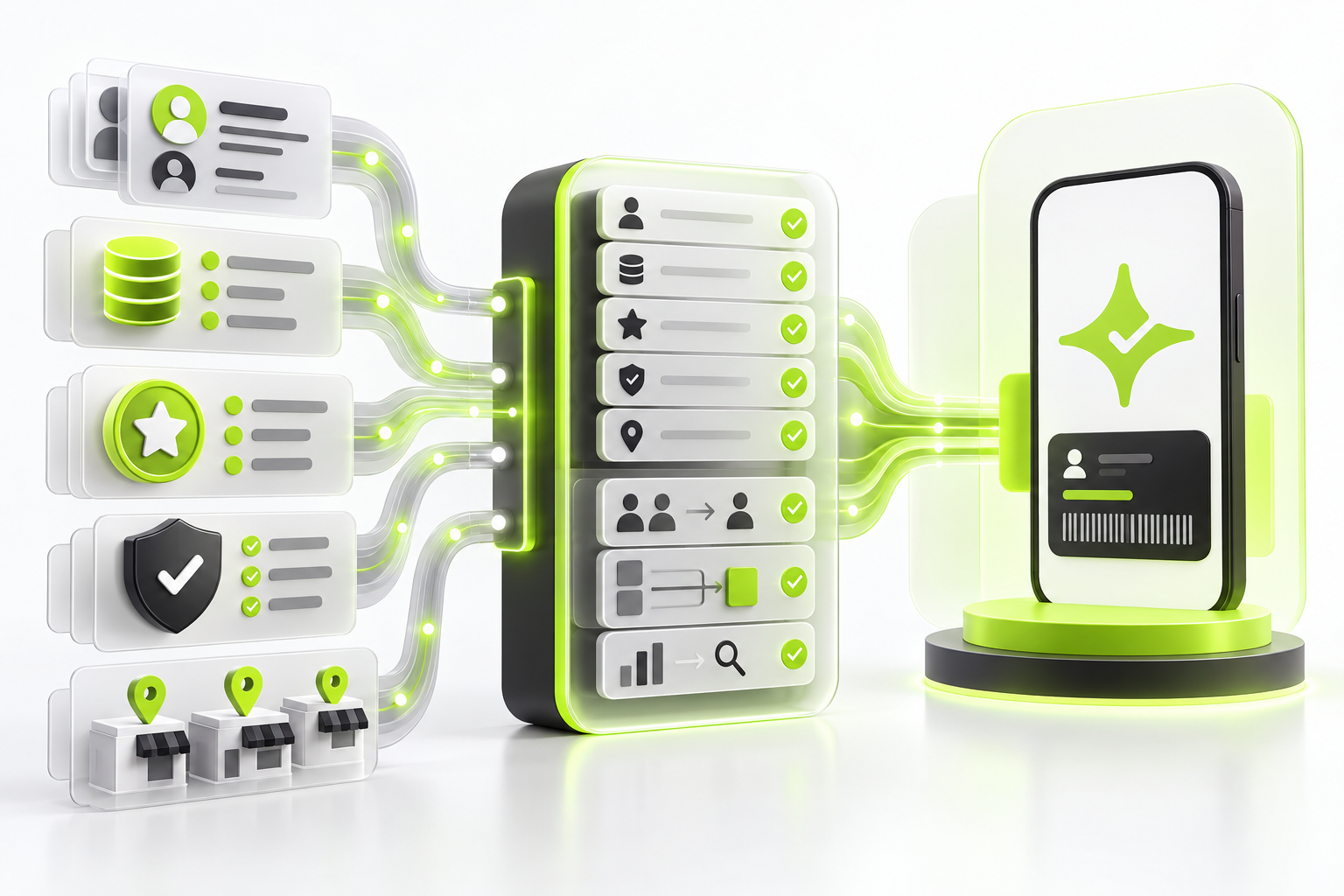
Lunchbox’s core site is positioned around enterprise order management at scale. The platform combines first-party web and app ordering, catering, order aggregation, guest engagement and integrations. Its product pages list POS connections such as Toast, Revel, Brink, Aloha, Micros and others, while the OPEN API page positions Lunchbox as a hub for restaurant technology integrations. Lunchbox also markets a separate SMB online-ordering product, so the company is not exclusively enterprise; this comparison focuses on the loyalty capability attached to its broader restaurant stack. Sources: lunchbox.io/ ; lunchbox.io/product ; lunchbox.io/open ; lunchbox.io/essential
Lunchbox loyalty has more program structure than a simple digital punch card
Lunchbox’s current loyalty documentation covers spend-based conversion programs, tiered programs, bankable points, visit programs, sign-up bonuses, birthday rewards, reward expiration, multi-point promotions and wallet-drop campaigns. Its help center also documents Bring Your Own Provider support for external loyalty systems such as Paytronix and Punchh. That makes Lunchbox relevant when loyalty must sit inside a larger restaurant ordering and guest-engagement architecture rather than operate as a standalone card. Sources: support.lunchbox.io/en/articles/9105211-loyalty-overview-lb-2-0 ; support.lunchbox.io/en/articles/9106136-loyalty-bring-your-own-provider
Lunchbox also connects loyalty to ordering and CRM
Lunchbox’s marketing product supports automated email, SMS and push campaigns, and its site says customer segmentation can use more than 40 data points. Its web and app ordering products are designed to keep loyalty visible inside the first-party ordering journey. For a restaurant brand trying to consolidate digital ordering, loyalty, marketing and catering around a shared guest profile, this breadth is a central part of the buying decision. Sources: lunchbox.io/marketing ; lunchbox.io/web-ordering ; lunchbox.io/app-ordering
Where Çentik is intentionally different
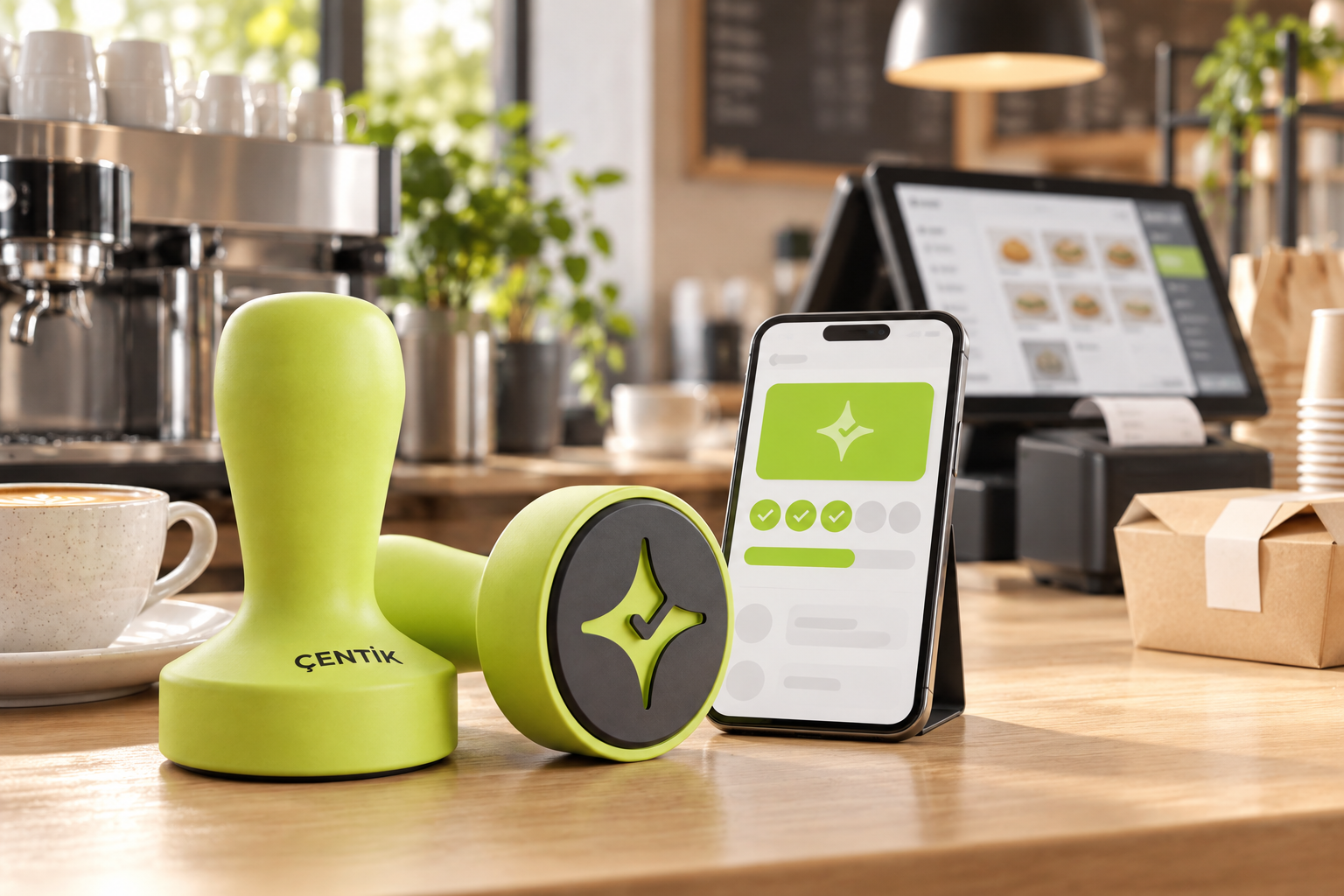
Çentik’s public English pages focus on reducing loyalty friction at the counter. A customer can receive a stamp through the physical Çentik Stamp using NFC or through QR, then view the digital card in the browser without installing a dedicated app. The card can also be added to Apple Wallet or Google Wallet. Çentik documents customer profiles, visit history, new/active/lapsed segmentation, reward tiers, barista accounts, campaigns and repeat-visit analytics, and states that its core flow does not require a POS integration. Sources: centik.app/en ; centik.app/en/how-it-works ; centik.app/en/digital-loyalty-card
Guest experience: app-free loyalty versus a richer branded ordering journey
- Çentik is the cleaner fit when the operator wants loyalty to work from a browser, NFC touchpoint or QR without asking every customer to download a restaurant app. Apple Wallet and Google Wallet are optional access points, not a requirement.
- Lunchbox supports branded web ordering as well as branded mobile apps. Its web product includes guest checkout, while its native app can surface rewards and saved ordering behavior.
- Lunchbox’s in-store implementation depends on the POS and feature. Official documentation shows POS guest lookup/redemption workflows, while Toast Scan for Rewards and Scan to Pay use QR codes inside the mobile app.
- Do not equate Lunchbox’s internal rewards wallet with Apple Wallet or Google Wallet loyalty passes. Public Lunchbox sources reviewed for this page did not confirm those pass formats.
POS and integration strategy
The products take opposite architectural approaches. Çentik says its core loyalty flow runs independently of the till, which can make it relevant when a café wants to add loyalty without replacing the current POS. Lunchbox is built around integrations: its current materials describe POS, delivery, loyalty, marketing and analytics connections, and the support center documents POS-specific setup and limitations. Recommendation: if Lunchbox is on the shortlist, validate the exact POS version, in-store earn/redemption path, refund behavior, menu sync and any required third-party contracts before signing. Sources: centik.app/en/how-it-works ; lunchbox.io/open ; support.lunchbox.io/en/collections/7303706-pos-configuration
Marketing and customer data
Lunchbox has the deeper publicly documented marketing stack: automated journeys across email, SMS and push, plus detailed segmentation and webhooks. Çentik’s public site documents customer segments, repeat-visit analytics and loyalty campaigns such as double stamps, first-visit, win-back and birthday offers. For a buyer, the practical distinction is whether the retention program needs full omnichannel lifecycle messaging or a simpler loyalty-centered campaign layer. Sources: lunchbox.io/marketing ; centik.app/en ; centik.app/en/pricing
Pricing and procurement
Lunchbox’s current public core product pages are demo-led, and its service terms describe annual recurring fees based on locations and other recurring charges specified in the customer agreement. A universal current list price for the core Lunchbox platform was not verified from the official sources reviewed, so buyers should request a written quote that separates platform, location, implementation, payment, messaging, integration and third-party loyalty costs where applicable. Çentik publicly offers a 30-day free trial with no credit card, but its current English pages show inconsistent paid-price information; this comparison therefore does not publish a U.S. subscription amount until that is reconciled. Sources: lunchbox.io/service-terms ; lunchbox.io/ ; centik.app/en ; centik.app/en/pricing
Migration: validate the data before you move it
Lunchbox documents a formal loyalty migration process. Its help center says imports can require a phone number or email, lifetime points, and conversion of points into credits before upload depending on the program. It also offers a Bring Your Own Provider path that can leave loyalty data with an existing provider. Çentik publicly documents setting a customer’s existing paper-card stamp count as a starting point, but a complete public specification for bulk migration from another digital loyalty database was not found in the current English pages. Confirm that process with Çentik before promising an automated transfer. Sources: support.lunchbox.io/en/articles/8684395-loyalty-customer-migration ; support.lunchbox.io/en/articles/9106136-loyalty-bring-your-own-provider ; centik.app/en
- Export customer identifiers, current balances or points, earned but unused rewards, lifetime activity and location mappings from the old system.
- Document consent and messaging preferences separately from loyalty balances; do not assume marketing permission transfers automatically.
- Define how duplicate accounts, expired rewards, refunds, negative balances and merged profiles will be handled.
- Run a sample migration and reconcile totals before cutover: customer count, active balances, outstanding rewards and location-level mappings.
- Communicate any rule changes to guests before launch, especially changes to earning rates, expiration, reward thresholds or app requirements.
Who should shortlist Çentik and who should shortlist Lunchbox?
- Shortlist Çentik if you are primarily solving repeat-visit loyalty for a coffee shop or café and want an app-free browser experience, NFC + QR at the counter, optional Apple/Google Wallet access, loyalty campaigns and analytics without a required POS replacement.
- Shortlist Lunchbox if you need loyalty as part of a larger restaurant digital-commerce program that also includes branded ordering, catering, order aggregation, POS connectivity, marketing CRM and a broader integration ecosystem.
- If you already run Paytronix, Punchh or another established loyalty provider, Lunchbox’s Bring Your Own Provider model deserves specific evaluation because it can preserve the external loyalty system while Lunchbox handles ordering and guest experience.
- If your highest-priority requirement is a simple digital stamp card rather than digital ordering infrastructure, compare the operational effort and contract scope of both products rather than comparing feature counts alone.
Limitations and verification points
- Çentik is narrower than Lunchbox in publicly documented restaurant commerce: no equivalent full ordering, catering or order-aggregation suite is presented on its current English product pages.
- price and multi-location status; avoid hard claims on either point until the live pages agree.
- Lunchbox feature behavior varies by POS and service type. Verify the exact in-store loyalty, payment, refund and redemption workflow for your POS rather than assuming every integration behaves the same way.
- Lunchbox’s help center notes that some loyalty-program changes should be handled with Lunchbox Support or a CSM, so operators that require completely self-serve loyalty administration should test the admin workflow in a demo.
- Public documentation can change. Recheck both vendors’ pricing, POS support and migration documentation immediately before contracting.
What independent review sites add
Independent review coverage for Lunchbox is limited enough that ratings should not drive the decision by themselves. Capterra’s page updated August 26, 2026 shows 3.9/5 from 7 reviews, while G2’s current Lunchbox page shows 5/5 from 1 review and explicitly says there are not enough reviews to provide buying insight. Treat individual comments as interview prompts for a demo or reference call, not as representative proof of platform quality. Sources: capterra.com/p/196918/Lunchbox/ ; g2.com/products/lunchbox/reviews
Decision checklist
- Do you need loyalty only, or ordering + catering + aggregation + loyalty?
- Must customers participate without installing an app?
- Do you need Apple Wallet or Google Wallet loyalty passes, or is an in-app rewards wallet acceptable?
- Which POS is in place today, and what exact earn/redeem/refund flows are supported?
- Do you need email, SMS and push automation from the same vendor?
- Will you keep an existing loyalty provider or migrate balances into a new loyalty engine?
- What data must move: profiles, points, credits, earned rewards, consent, visit history and location mappings?
- What is the full first-year cost including implementation, locations, messaging, payment fees, integrations and third-party contracts?
Frequently asked questions
Is Lunchbox mainly a loyalty platform?
No. Loyalty is one part of a broader restaurant technology suite that includes branded web and app ordering, catering, order aggregation, marketing CRM and integrations. That broader scope is central to Lunchbox’s current positioning.
Does Çentik require customers to download an app?
No. Çentik’s current English product pages say the loyalty card opens in the browser. Customers can also add the card to Apple Wallet or Google Wallet on supported devices.
Does Lunchbox require a mobile app for loyalty?
Not for every flow. Lunchbox supports web ordering and POS guest lookup, but some documented in-store Scan for Rewards and Scan to Pay experiences use a Lunchbox-powered mobile app and QR codes. Confirm the workflow for your POS and service type.
Which platform has deeper restaurant ordering capabilities?
Lunchbox publicly documents a much broader ordering stack, including branded web/app ordering, catering and third-party order aggregation. Çentik’s current public product is focused on loyalty, customer retention and QR menu functionality rather than full restaurant order management.
Can an existing loyalty database be migrated?
Lunchbox publishes migration documentation for customer loyalty data and a Bring Your Own Provider option. Çentik publicly documents carrying over a paper punch-card starting balance, but a full bulk digital-migration specification should be confirmed with Çentik before committing to a transfer plan.
How should a U.S. operator compare price?
Use a full first-year cost model rather than a headline monthly fee. Lunchbox’s core pricing is contract-led in the official sources reviewed. Çentik offers a 30-day free trial, but its current English pages should be reconciled on the paid U.S. price before this comparison publishes a number.
Test the lighter-weight loyalty path
If your main goal is to replace paper punch cards with browser-based loyalty, NFC + QR and repeat-visit analytics without changing your POS, start with Çentik’s free trial and validate the counter flow with your own staff and customers.
Start Çentik free trial