
Çentik vs Pepper at a glance
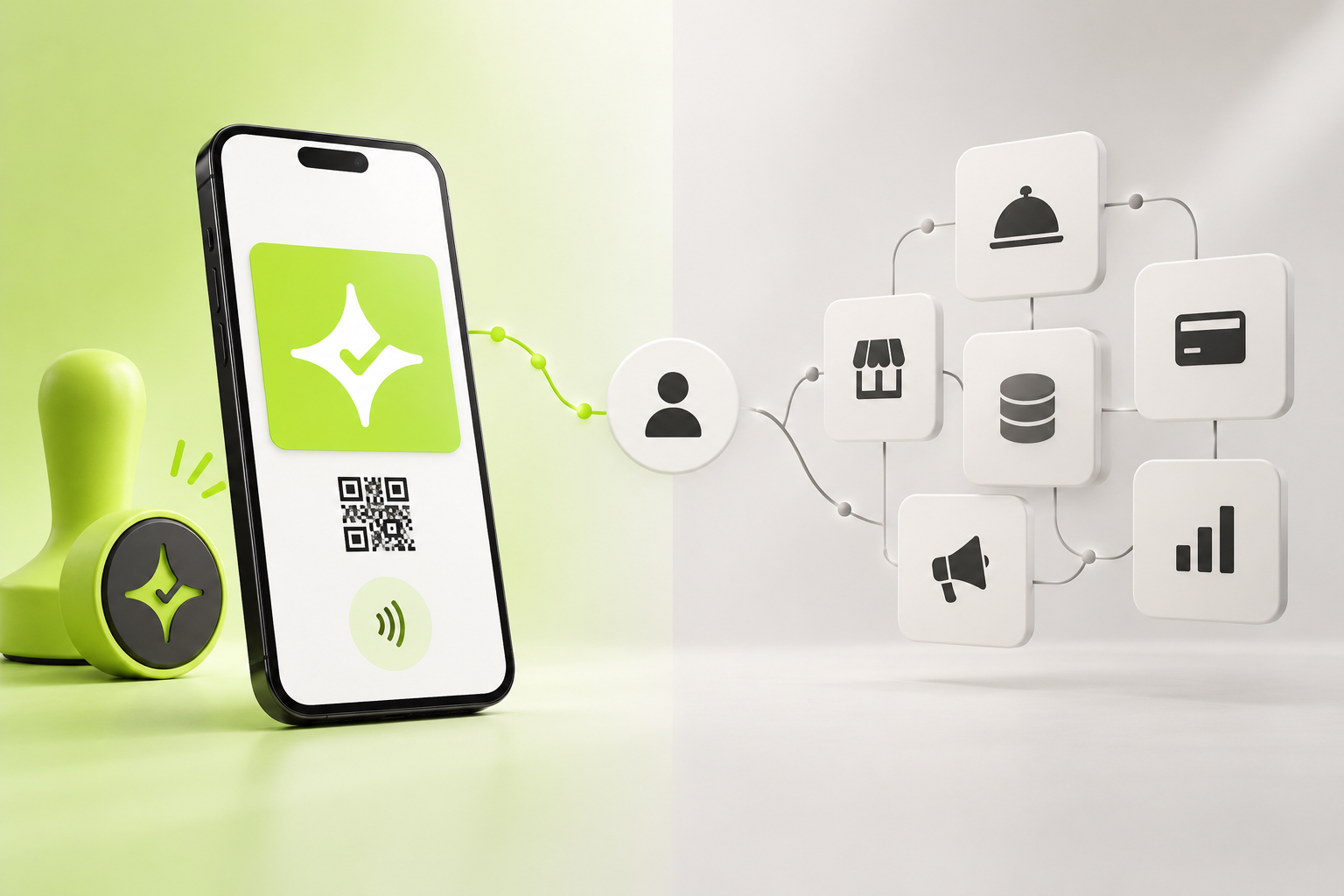
Direct answer: choose based on operating scope. Çentik is designed around loyalty and repeat visits, with an app-free browser journey, Apple Wallet and Google Wallet access, QR and a dedicated NFC in-store touchpoint. Pepper goes further into hospitality commerce: its public product pages cover loyalty, ordering, payments, branded mobile and web experiences, segmentation, push notifications, POS-linked loyalty and a broad partner ecosystem. Pepper is therefore the more expansive hospitality stack; Çentik is the more focused option when the objective is to add loyalty without rebuilding the wider ordering and payment journey.

| Criterion | Çentik | Pepper |
|---|---|---|
| Core proposition | Digital loyalty and customer-retention layer for cafés and repeat-visit venues, with QR/NFC, browser access, Wallet and analytics. | Hospitality platform combining loyalty, marketing, ordering and payments. |
| Customer access | Browser-based loyalty; Apple Wallet and Google Wallet are documented; no dedicated customer app is required for the core journey. | Mobile app and web-based loyalty are documented, alongside digital-wallet support. |
| Loyalty mechanics | Public pages clearly document digital stamps, reward tiers and campaigns such as double stamps, win-back and birthday offers. | Documents stamps and points together, tier-based loyalty, double stamps/points, referrals, surprise-and-delight rewards, vouchers and audience-specific offers. |
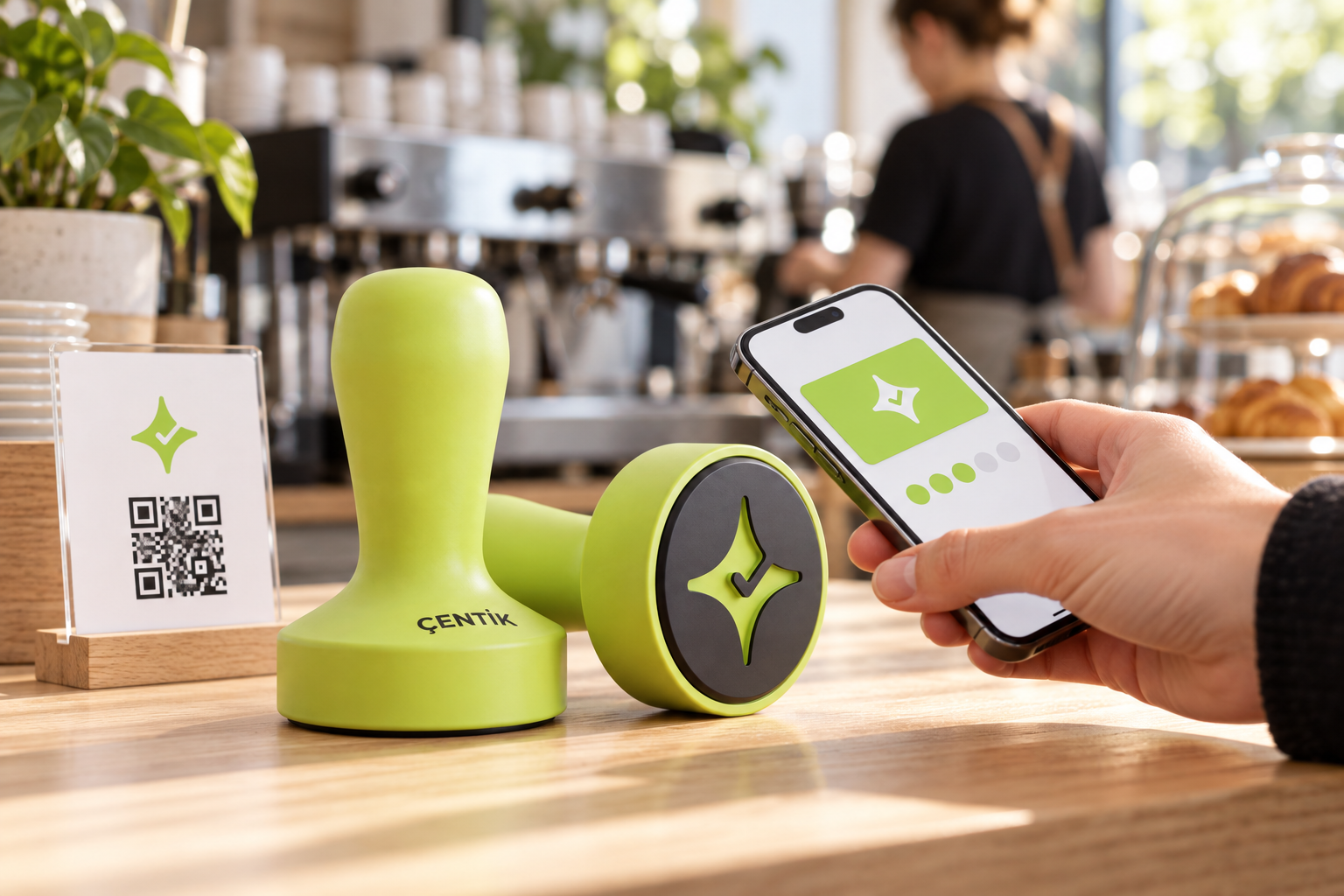
| In-store earning | Dedicated Çentik Stamp NFC touchpoint plus QR workflows. | Public pages document QR/POS scanning and loyalty on Quickpad; the pages reviewed do not document a comparable dedicated NFC loyalty counter device, so this should be verified directly with Pepper if required. |
| Ordering and payments | Not presented as the core product on the reviewed public site; the public proposition centres on loyalty, QR Menu Pro, customer management and analytics. | Order-to-table, click-and-collect, delivery, pay-at-table, tipping, bill splitting and payment support are documented. |
| Marketing and CRM | Customer lists, segments, repeat-visit analytics and loyalty campaigns are documented. | Real-time customer data, segmentation, in-app messages, push notifications, geo-located content and personalised campaigns are documented. |
| Integrations | POS integration is not required to run the loyalty programme, according to Çentik's public site. | Pepper publishes an integration catalogue spanning POS, payment, CRM and marketing providers. |
| Migration | No public Pepper-to-Çentik automated migration claim was found; a switch should therefore be scoped around exportable identities, loyalty balances, rewards and consent records before commitment. | Pepper explicitly says it can migrate existing customers to Pepper and assign equivalent points balances or rewards. Outbound export format, history and consent metadata should still be confirmed contractually. |
| Pricing | Current official English pages show inconsistent public pricing, so a UK price should be verified and standardised before publication or procurement. | Pepper describes pricing as bespoke and asks prospects to book a call for a demo and pricing explanation; no fixed public package price was verified. |
| Best fit | Editorial fit: independent venues and smaller multi-site operators that primarily want a quick loyalty rollout without making loyalty dependent on a POS replacement. | Editorial fit: hospitality groups that want loyalty tightly connected with ordering, payments, branded digital experiences, integrations and operational tooling. |
Where the two platforms overlap
This is not a simple 'app versus no-app' comparison. Pepper documents web-based loyalty as well as app-based loyalty and lets customers add a loyalty card to Apple Pay or Google Wallet. Çentik likewise supports browser access and Apple Wallet/Google Wallet, while making 'no app required' central to its positioning. Both can therefore serve customers who do not want to rely on a traditional plastic or paper card; the bigger difference is the amount of hospitality infrastructure wrapped around the loyalty programme.
Where Pepper goes further
Pepper's public scope is substantially broader than loyalty alone. PepperOS combines loyalty with digital ordering and payments, and Pepper also markets Quickpad for staff-side ordering, payments and loyalty scanning. Its platform pages document pay-at-table, click-and-collect, order-to-table, tipping, bill splitting, gift-card redemption, POS-linked loyalty, push notifications, customer segmentation, referrals and geo-located offers. Its integration directory lists multiple POS, payment, CRM and marketing partners.
- Pepper is better aligned with a hospitality operator that wants loyalty to sit inside a wider ordering-and-payment transformation rather than remain a standalone retention layer. This is an editorial recommendation based on Pepper's documented product scope.
- Pepper also presents a more service-led procurement model: its site promotes bespoke pricing and states that each client has a dedicated growth manager.
- For at least one live customer implementation, Pieminister's privacy policy identifies PepperHQ Ltd as a data processor for its loyalty app; Google Play independently lists PepperHQ Ltd as the app developer. That supports the view that Pepper operates behind branded customer experiences, but data-controller and processor roles must still be checked per contract.
Where Çentik is the simpler fit
Çentik is designed to be added without requiring a POS integration. Its public experience is centred on a digital loyalty card, NFC and QR earning, browser access, Apple Wallet/Google Wallet, campaigns, customer management, analytics, barista accounts and multi-location support. That makes it a credible fit for a café, bakery, dessert shop or other repeat-visit venue whose immediate problem is retention rather than mobile ordering, payment orchestration or a large integration programme.
- Use Çentik when the merchant wants to preserve the existing till/POS and add loyalty alongside it.
- Use Çentik when a physical tap ritual matters: its official product pages document the Çentik Stamp NFC touchpoint as well as QR.
- Do not position Çentik as uniquely app-free against Pepper. Pepper also documents web-based loyalty and digital-wallet cards; Çentik's distinction is the combination of its app-free-first approach with its NFC/QR loyalty touchpoint and narrower deployment scope.
Customer journey: browser, app, Wallet, QR and NFC
For UK operators, the practical question is how customers identify themselves at the point of purchase. Çentik supports a browser-based loyalty account, Apple Wallet and Google Wallet, with NFC or QR used in the earning flow. Pepper supports branded mobile apps, web-based loyalty, wallet cards and QR/POS scanning. If a dedicated branded app is part of the commercial strategy, Pepper's public platform is built around that model. If the aim is to avoid making app installation a prerequisite, both have web paths, while Çentik places that choice at the centre of the product.
Pricing and procurement in the UK
Pepper does not publish a fixed package price on the current pages reviewed. Its current enquiry page describes pricing as bespoke and says the team explains it during a 30-minute call. Çentik publicly promotes a 30-day free trial, but its English homepage and English pricing page currently display inconsistent amounts and currencies. For a fair UK comparison page, do not claim a numerical price advantage until Çentik's canonical English/UK pricing is made consistent across homepage, pricing, checkout and structured data.
Integrations and operational complexity
Pepper is designed to connect deeply into a hospitality technology estate. Its public integration directory includes POS systems, payment providers, CRM tools and marketing services, while PepperOS expects customer ordering and loyalty to work alongside those systems. Çentik takes the opposite implementation stance on its current public site: loyalty can be launched without a POS integration. Neither model is inherently better. An operator with multiple systems and a requirement for joined-up commerce may value Pepper's integration depth; a venue trying to reduce integration dependencies may prefer Çentik's lighter setup.
Migration from Pepper to Çentik
A migration should preserve more than a headline points balance. Pepper publicly states that it can migrate customers into Pepper with equivalent points balances or rewards, which indicates that customer and loyalty-state migration is part of its operating model. Pepper's public pages reviewed here do not define what an outbound export contains, and Çentik does not publicly document an automated Pepper importer. Before switching, obtain a sample export and agree the mapping in writing.
- Export and map customer identifiers, current points or stamp balances, unused reward entitlements, tier/status values, branch relationships and relevant transaction or visit history.
- Separate loyalty-service data from direct-marketing permissions. Preserve the source, timestamp, wording and channel of consent or other marketing basis where it is lawful and relevant to migrate.
- Create deterministic rules for duplicate accounts, expired rewards, negative/adjusted balances and users who have opted out of marketing.
- Run a test migration on a small cohort, reconcile totals before and after, and keep an audit trail of transformations and exceptions.
- Tell customers what is changing, who will process their information, what happens to existing rewards and how they can exercise privacy rights.
UK data-protection and direct-marketing rules matter here. The ICO says organisations must be transparent about how personal information is used, respect the absolute right to object to direct marketing, and keep evidence of valid consent where consent is relied upon. The ICO also specifically notes that loyalty-scheme members should understand what messages they will receive and that opt-out mechanisms must be clear. A migration plan should therefore treat consent and suppression records as first-class data, not as a generic customer-list field.
Who is each platform best for?
Çentik is likely the better operational fit when
- The main goal is a digital loyalty programme rather than a full ordering-and-payment platform.
- The venue wants to keep its existing POS and avoid making a POS integration a launch dependency.
- An app-free browser journey, mobile Wallet access and a physical NFC/QR loyalty interaction are important.
- The business is an independent venue or smaller multi-site operation that values a lighter implementation over a wider enterprise-style hospitality stack.
Pepper is likely the better operational fit when
- Loyalty must be tightly integrated with digital ordering and payments.
- A branded mobile app and web experience are central to the customer strategy.
- The operator needs a broad POS/payment/CRM/marketing integration ecosystem.
- The marketing team wants features such as push notifications, audience segmentation, referrals, tiers and geo-located content inside the same hospitality platform.
Limitations and checks before signing
- Çentik: verify the canonical UK price before publishing or signing; current English public pages are inconsistent.
- Çentik: if you require a Pepper migration, ask for a written data-import scope, supported fields, test procedure and rollback plan because no public automated Pepper importer was verified.
- Pepper: ask for a full quote covering licence, implementation, branded app/web work, integrations, payments, hardware, support and any transaction-related charges; current public pricing is bespoke.
- Pepper: if a dedicated NFC loyalty counter touchpoint is mandatory, verify it directly; the public Pepper pages reviewed emphasise QR/POS scanning rather than a dedicated NFC loyalty device.
- Both: confirm UK data-controller/processor roles, data residency and transfer terms, retention, deletion, export rights and marketing-consent handling in the contract and privacy documentation.
Company and evidence context
PepperHQ Limited is an active UK private company, incorporated on 18 September 2013 according to Companies House. Pepper's own site says it works with 200+ high-street hospitality brands; that customer-count statement is a vendor claim rather than an independently audited metric. Google Play independently lists PepperHQ Ltd as the developer of the Pieminister app, corroborating Pepper's role in delivering branded hospitality applications.
Decision checklist
- Do we need loyalty only, or loyalty plus ordering and payments?
- Must customers be able to participate without installing a dedicated app?
- Is a branded native app strategically important?
- Do we need a physical NFC loyalty touchpoint at the counter?
- Which POS, payment, CRM and marketing systems must connect on day one?
- What are the all-in first-year costs, including implementation, hardware and integrations?
- Can we export customer identities, loyalty balances, reward entitlements and consent/suppression records in a usable format?
- Who is responsible for customer communications, privacy notices and reconciliation during migration?
Is Pepper only an app-based loyalty platform?
No. Pepper documents both app-based and web-based loyalty, plus loyalty cards in Apple Pay or Google Wallet. Its broader proposition nevertheless places branded app/web experiences alongside ordering, payments and marketing.
Does Çentik require a POS integration?
No. Çentik's public site says POS integration is not required to run its loyalty programme.
Does Pepper support both points and stamps?
Yes. Pepper states that points and stamps can be used together, and it also documents tier-based loyalty and double stamps/points.
Does Pepper publish UK pricing?
A fixed public package price was not verified on the current pages reviewed. Pepper's current enquiry page describes pricing as bespoke and says pricing is explained during a call.
Can I migrate customers from Pepper to Çentik?
A migration may be possible, but no public automated Pepper-to-Çentik importer was verified. Before committing, obtain a Pepper export sample and confirm with Çentik how identities, balances, rewards, history and consent records will be mapped.
Which is better for a small independent café?
If the café mainly wants loyalty without replacing its POS or adding a broader ordering/payment platform, Çentik is the more directly aligned product model. If the café also wants branded ordering, payments, deeper integrations and campaign tooling in the same platform, Pepper's wider scope may be more appropriate. This is an editorial fit assessment based on each vendor's documented scope.
See whether Çentik fits your venue
If your priority is to launch digital loyalty without making a new POS, ordering stack or customer app a prerequisite, review Çentik's current workflow and confirm UK pricing and migration requirements before rollout.
Explore Çentik