
At a glance: these are different types of loyalty products
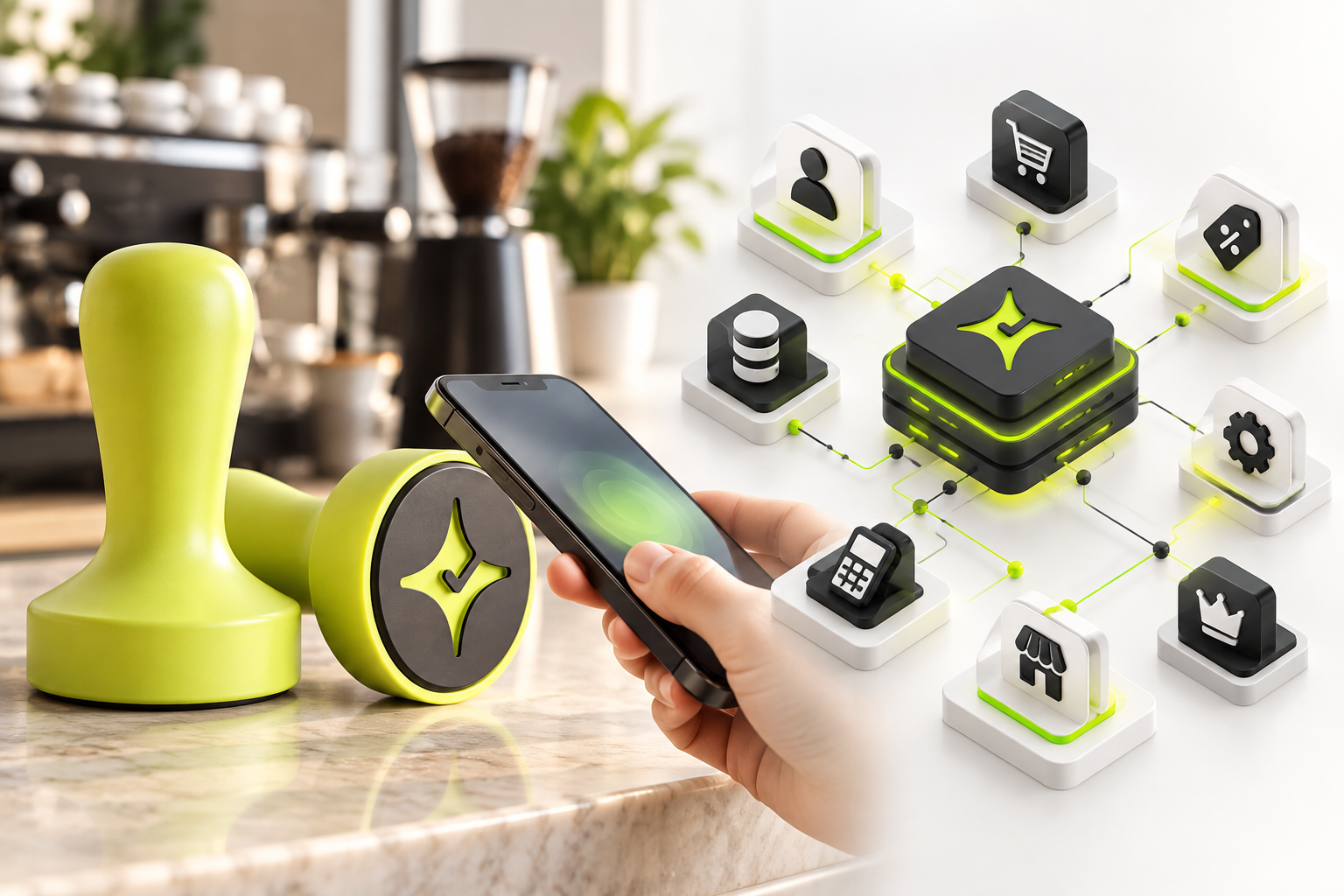
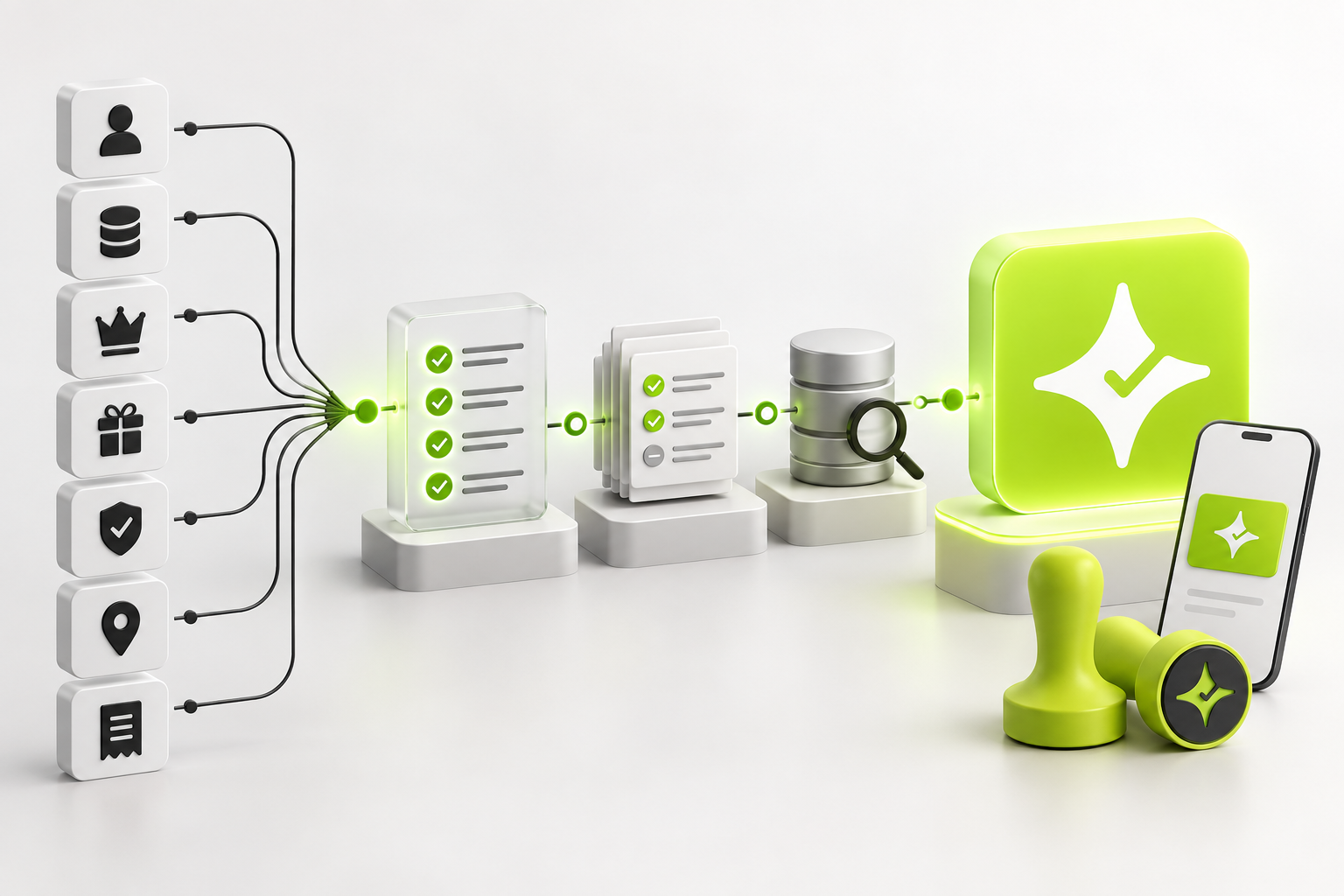
Çentik is positioned as a ready-to-run digital loyalty experience for coffee shops: customers can earn stamps through NFC or QR, use a browser-based card, add the card to Apple Wallet or Google Wallet, and the café can run the core program without replacing its POS. Talon.One is positioned as enterprise incentives infrastructure: its Rule Engine evaluates customer, cart and event data and returns effects such as discounts, coupons or loyalty actions to the merchant’s integration layer. Talon.One’s developer documentation says an integration uses at least the Integration API for user-facing real-time flows. Talon.One+1
| Criterion | Çentik | Talon.One |
|---|---|---|
| Product model | Customer-facing loyalty SaaS for cafés, with a digital stamp card, NFC/QR counter flow, campaigns, analytics and QR menu. | API-led enterprise incentives platform covering loyalty, promotions and offer execution. Talon.One+1 |
| Typical fit | Independent and smaller multi-location café operators that want a packaged loyalty experience without forcing an app download or changing the till. | Mid-market and enterprise teams that need configurable promotion and loyalty logic across multiple systems and channels; G2’s current profile skews toward medium and large organizations. G2 |
| Customer experience | Browser-based digital card, Apple Wallet and Google Wallet support, plus NFC and QR at the counter. | Backend engine rather than a prescribed consumer app; the merchant or its partners implement the front end and apply returned rule effects. Talon.One+1 |
| Setup and integration | Core public workflow is designed to run independently of the POS. Centik | Requires integration work around customer sessions, attributes, API keys and effect handling. Talon.One+1 |
| Loyalty model | Digital stamp and reward tiers with customer profiles, visit history, repeat-visit analytics and focused retention campaigns. | Profile-based and card-based loyalty programs with points, tiers, subledgers, activation and expiration settings, and rule-driven earning or redemption. Talon.One+1 |
| Promotion depth | Focused café campaigns including double stamps, first-visit, win-back and birthday campaigns on the public product pages. Centik | Broader rules framework for discounts, bundles, cart-item logic, referrals, custom attributes and other promotion effects. Talon.One+1 |
| Commerce and POS integration | No POS integration is required for the core Çentik flow. Centik | Designed to connect with existing commerce and POS ecosystems through APIs and technology partners. Talon.One+1 |
| Physical counter touchpoint | Çentik publicly documents its NFC Çentik Stamp plus QR workflow. | The reviewed Talon.One product and developer pages describe software, APIs and integrations; they do not present a proprietary NFC counter device as a core product. |
| Pricing approach | price until Çentik’s English pages are reconciled: the English homepage currently shows $9.99/month while the English pricing page returned by search shows ₺999/month. | No public numeric subscription price is shown on the current pricing page. Talon.One says pricing is personalized around data volume and presents Starter, Professional and Enterprise packages. Talon.One+1 |
| Migration tooling | Public pages reviewed do not document a general enterprise bulk-migration API. Confirm import scope with Çentik before committing to a migration. | Talon.One documents imports for customer profiles, historical orders, loyalty points and loyalty cards through API and CSV-based workflows. Talon.One+2Talon.One+2 |
When Çentik is the more natural fit
Çentik is most aligned with a U.S. café or coffee-shop operator that wants to launch a recognizable loyalty experience at the counter without commissioning a custom front end or replatforming its POS. The public flow is concrete: the barista gives a stamp through the Çentik Stamp or scans the customer’s QR code, the customer’s digital card updates, and the same card can live in Apple Wallet or Google Wallet.
- This operating model fits when speed to launch, a visible in-store touchpoint and low customer friction matter more than building a highly customized promotion engine.
- It is particularly relevant when the loyalty mechanic is visit or stamp based and the business wants straightforward customer, repeat-visit and campaign reporting.
- The trade-off is scope: the public Çentik pages do not document the same breadth of API-first promotion logic, cart-item rules and enterprise integration controls that Talon.One documents. That is a product-shape difference, not evidence that either platform is universally better.
When Talon.One is the more natural fit
Talon.One is better aligned with organizations that already have a commerce stack and want a configurable incentives layer inside it. Its documentation centers on Applications, customer sessions, custom attributes, APIs and a Rule Engine that evaluates conditions and returns effects for the merchant to apply. Its loyalty product supports profile-based and card-based programs, while the broader rule framework can handle discounts, product-level logic, referrals and other complex incentive scenarios. Talon.One+2Talon.One+2
That flexibility comes with a different implementation model. Talon.One’s quickstart requires an Application, API key, promotion logic and API calls, while its pricing is sales-led rather than a simple public per-location subscription. Talon.One+1 For a team running several digital channels, custom checkout logic, multiple markets or sophisticated promotion rules, that architecture may match the requirement. For a single café that only needs a digital punch card, it can represent more integration surface than the use case requires.
Decision criteria for a U.S. buyer
- Front-end ownership: decide whether the vendor should provide the customer loyalty experience or whether loyalty logic will be embedded into your own app, website, checkout and POS surfaces.
- Technical capacity: assess whether your team can own API integration, customer-session modeling, attributes, testing and ongoing effect handling, or whether you need a packaged workflow.
- Promotion complexity: determine whether simple visit rewards and retention campaigns are enough or whether you need cart-item filters, advanced discounts, referrals, tiers and cross-channel rules. Talon.One+1
- In-store behavior: decide whether a visible NFC/QR counter interaction is part of the strategy or whether loyalty will run through existing digital and POS channels.
- Procurement model: Talon.One publishes customized, data-volume-based pricing; Çentik’s U.S. public pricing should be verified because its current English pages are inconsistent. Talon.One+2Centik+2
- Data portability: before signing, test export and import paths for customer identifiers, balances, point status, tiers, reward definitions, consent records, locations and transaction history.
Limitations and trade-offs
Çentik’s strength is its packaged café workflow, but buyers needing deep transaction-level commerce logic should verify the API and integration roadmap rather than assume enterprise capabilities that are not publicly documented. Talon.One’s strength is rule and integration depth, but it is not a turnkey café loyalty app: its documentation makes clear that rule effects are returned to the merchant’s integration layer, which is responsible for applying them. Talon.One+1
- Çentik limitation to verify before publication: U.S. pricing is inconsistent across current English pages. Reconcile the live offer and checkout before putting a dollar figure in SEO copy.
- Talon.One limitation to plan for: its enterprise flexibility creates integration and governance work. The system expects data mapping, API calls and rule configuration rather than providing one prebuilt café flow. Talon.One+1
- Talon.One pricing is not directly comparable with a small-business per-location subscription because the vendor describes individualized, data-volume-based pricing. Talon.One
Migration considerations
If you are moving into Talon.One, the vendor provides explicit migration documentation. Customer profiles and historical orders can be imported through the Integration API, while loyalty points and cards can be imported through documented API or CSV workflows. Talon.One also documents broader import paths for coupons and loyalty data. Talon.One+2Talon.One+2
If you are moving from Talon.One into Çentik, do not treat the migration as a simple export-and-upload until Çentik confirms the exact import surface. Build a field map for customer identifiers, active and pending balances, loyalty cards, tiers, reward liabilities, consent status, location ownership and historical transactions. Decide which history must remain queryable versus which data only needs to seed opening balances. Run a small pilot, reconcile totals, test reward redemption and rollback, and only then schedule a full cutover.
Independent review context
Independent review data supports the view that Talon.One is used heavily outside the small-business segment, but it should not be treated as a complete market sample. G2’s enterprise loyalty page reports that its Talon.One profile is 54% medium and 35% large organizations, while G2 lists 64 Talon.One reviews overall. Capterra showed 16 reviews as of September 23, 2026, which is useful qualitative evidence but a relatively small review base. Capterra
Frequently asked questions
Are Çentik and Talon.One direct competitors?
Only partly. Both can support loyalty outcomes, but Çentik is a packaged customer-facing loyalty product for cafés, while Talon.One is an enterprise incentives engine that plugs into a company’s existing channels and systems.
Which is more suitable for a small U.S. coffee shop?
If the requirement is a fast digital stamp program with NFC/QR, no mandatory customer app and no POS replacement, Çentik is more closely scoped to that job. If the business has engineering resources and needs complex omnichannel promotion logic across its own app, ecommerce and POS stack, Talon.One addresses that architecture more directly.
Does Talon.One include a customer app?
Talon.One’s published model is a backend incentives and rule engine. Its APIs return effects to the merchant’s integration layer, which decides how those effects are applied and presented. Talon.One+1
Does Çentik require a POS integration?
No for its core public workflow. Çentik says it can run independently of the till, using its NFC/QR counter flow and browser-based loyalty card. Centik
How does pricing compare?
Talon.One publishes package structure but not a numeric subscription price; it says quotes are individualized based on data volume. Çentik’s English pages currently show inconsistent prices, so a U.S. comparison page should verify the live commercial offer before publishing an exact amount. Talon.One+2Centik+2
Can an existing loyalty program be migrated?
Talon.One documents imports for customer profiles, past orders, loyalty points and loyalty cards. For migration into Çentik, confirm the supported import format and which balances, tiers, consents and history can be carried over before committing to a cutover. Talon.One+1
Test the loyalty experience your customers will actually use
If your priority is a straightforward café loyalty flow without a POS replacement project, try Çentik with your own reward target, staff workflow and customer journey before rolling it out more widely.
Start Çentik free trial