
Çentik vs TapMango: The Quick Answer
Choose Çentik if you want a straightforward digital loyalty program with transparent entry pricing, an app-free customer experience, NFC and QR interactions, and the flexibility to offer count-based or balance-based rewards. Çentik Pro costs $19.99 per month for the first location. Choose TapMango if your business needs a broader customer engagement platform with built-in referrals, paid memberships, branded mobile apps, marketing automation, online ordering, and supported POS integrations. TapMango offers customized pricing based on business requirements.[1][2][3][5]
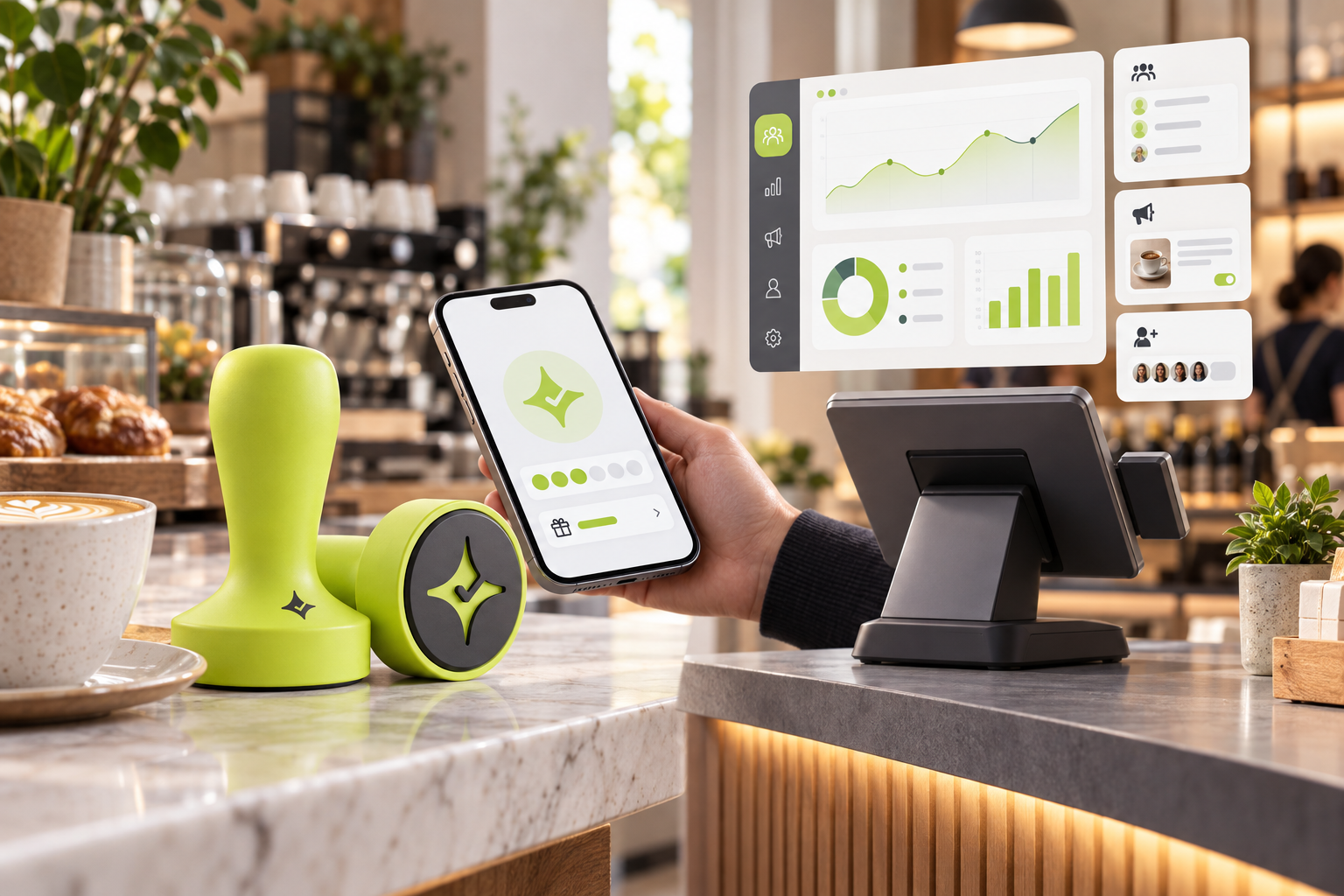
An important distinction: neither platform should automatically be classified as POS-dependent. Çentik can operate without a POS integration, while TapMango supports both integrated POS workflows and standalone operation using its tablet. The more meaningful difference is how each platform handles loyalty interactions and how much additional marketing and commerce functionality a business requires.[3][4]
Çentik vs TapMango: Feature Comparison
| Criterion | Çentik | TapMango |
|---|---|---|
| Primary positioning | Digital loyalty and customer retention using NFC, QR, rewards, and merchant analytics | Customer loyalty, engagement, marketing automation, and commerce platform |
| Monthly pricing | $19.99/month for Pro, first location included | Custom quote based on factors including locations, tablets, and messaging volume[3] |
| Customer app requirement | No app download required; customers can use a browser-based experience | Supports customer-facing tablets, digital engagement, and branded mobile apps; a branded app is not required for every configuration[4] |
| Count-based rewards | Supported through digital counts or stamps | Supports punch cards, points, and reward tiers[4] |
| Balance-based rewards | Supported through NFC or QR interactions | Supports points balances and reward programs; separately offers stored-value and payment-related capabilities[1][2] |
| NFC interactions | Physical Çentik Damper NFC touchpoint | Uses customer-facing tablets and supported checkout integrations; an equivalent NFC Damper workflow is not established by the reviewed materials |
| QR interactions | QR-based rewards and balance granting, including a counter-displayed QR workflow | QR-supported customer experiences, including QR-based dine-in ordering in a specified integration configuration[2] |
| POS independence | Core loyalty workflows can operate without a POS integration | Can operate with supported POS integrations or independently using TapMango's tablet[3] |
| POS-informed loyalty | An optional QR balance flow can use the amount received from a POS; compatibility depends on the implementation | Offers supported POS integrations with transaction-linked points and redemption workflows[4] |
| Marketing campaigns | Customer campaigns, including repeat-visit and win-back use cases | SMS, email, push notifications, behavioral automation, and segmentation[1] |
| Referral programs | Not established as a dedicated feature in this comparison | Dedicated referral rewards[1] |
| Paid memberships | Not established as a dedicated feature in this comparison | Dedicated paid membership offering[1] |
| Branded mobile application | Browser and digital Wallet-oriented customer experience | Custom branded iOS and Android applications[1] |
| Online ordering | QR menu functionality; a full online ordering and payment platform is not established here | Online ordering offered as part of its platform[1] |
| Customer management | Customer profiles, repeat-visit tracking, segmentation, and analytics | CRM, behavioral segmentation, customer profiles, and analytics[1] |
| Multiple locations | Multi-location merchant management | Cross-location loyalty programs, central control, and location-specific reporting[4] |
| Implementation approach | Start with NFC or QR without requiring a POS replacement | Assisted setup, tablet options, POS configuration, and migration support[3][4] |
The comparison reflects the capabilities described in the referenced product materials. A feature not established for one platform should not be interpreted as proof that the platform cannot support it. TapMango's precise feature availability, supported integrations, and commercial terms depend on its proposed configuration.[3][4]
How Çentik Works: NFC, QR, Counts, and Loyalty Balances
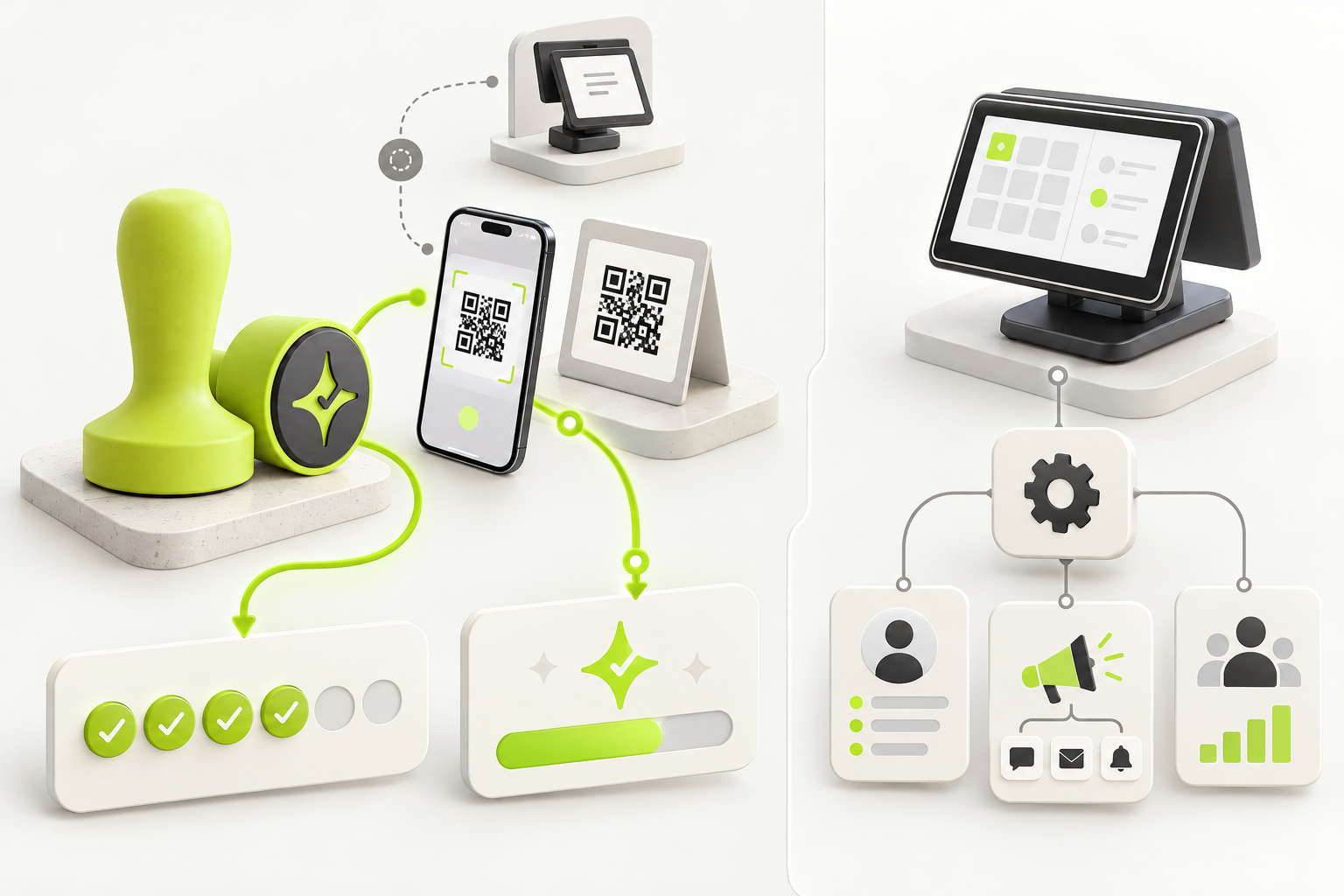
Çentik supports two important approaches to rewarding repeat customers: count-based rewards and balance-based loyalty. A count-based program can track progress toward a reward after a specified number of qualifying purchases or visits. A balance-based program grants loyalty value to a customer's account according to the merchant's configured rules. Both approaches can use NFC or QR interactions, allowing businesses to choose a workflow that fits their service counter.[5]
NFC Rewards at the Counter
With the physical Çentik Damper, NFC becomes an in-store interaction for loyalty participation. A customer can use a compatible phone at the designated touchpoint to receive a qualifying count or balance credit. The experience is intended to avoid the need for customers to download a separate application. For cafés with frequent, relatively simple transactions, this creates a recognizable loyalty interaction at the counter.[5]
QR Rewards and POS-Informed Balances
Çentik can also grant counts or loyalty balances through QR codes. In a counter workflow, the POS interface can display a QR code for the customer to scan. Depending on the configured flow, that interaction can award a count or grant a balance. An optional implementation can calculate the balance granted through the QR flow using the transaction amount received from the POS. This is different from claiming universal POS compatibility or automatic transaction synchronization across all systems. Businesses should evaluate the data available from their own checkout setup.
Why These Two Reward Models Matter
- Count-based rewards suit businesses that want customers to progress toward a clearly defined reward after qualifying purchases.
- Balance-based rewards offer flexibility when different transactions should contribute different amounts of loyalty value.
- NFC provides a physical in-store interaction, while QR offers an alternative that can work through an on-screen code.
- Businesses can begin with a POS-independent loyalty workflow rather than making POS replacement a prerequisite.
- Balance-based loyalty value should not be confused with a bank balance, cash account, payment wallet, or withdrawable funds.
How TapMango Works: Loyalty, POS Integrations, and Marketing
TapMango positions itself as a broader customer engagement platform. Its published product information describes points, reward tiers, referrals, customer segmentation, SMS and email marketing, push notifications, branded applications, online ordering, and supported POS integrations. These capabilities make TapMango relevant to businesses that want loyalty connected to a larger customer acquisition and retention strategy rather than operating only as a digital reward card.[1][2]
Supported POS Integrations
TapMango describes integration workflows that can apply loyalty points and support redemption as part of the register transaction. Its pricing information identifies integrations with more than 40 POS platforms, including Clover, Square, Toast, Lightspeed, and Shopify. That does not mean every function works identically with every supported platform. Merchants should confirm the exact integration, required configuration, and supported earn-and-redeem actions for their POS version.[3][4]
Marketing Automation and Customer Engagement
TapMango offers engagement features beyond issuing rewards. Its platform includes automated customer communication, behavioral targeting, referral incentives, audience segmentation, and reactivation campaigns. These tools may be especially useful for retailers, restaurant groups, and other businesses that have enough customer activity to benefit from segmented marketing. The business should still consider communication costs, consent management, campaign workload, and whether the proposed plan includes its desired channels.[1][3]
Branded Apps, Memberships, and Ordering
TapMango offers branded mobile applications, paid memberships, and online ordering capabilities. These represent meaningful differences for businesses that want customers to engage with a branded digital storefront or membership program. However, they also introduce additional implementation and operational considerations. A café that primarily wants a simple reward program may not need the full scope of these features.[1]
Çentik vs TapMango Pricing in 2026
Çentik Pro costs $19.99 per month for the first location. That provides a clear starting point for a U.S. business evaluating the cost of digital loyalty. TapMango does not publish a single universal monthly subscription price on its current pricing page. Instead, it provides a customized quote based on factors including location count, tablet requirements, and messaging volume.[3]
| Pricing Factor | Çentik | TapMango |
|---|---|---|
| Published entry price | $19.99/month for the first location | Request a custom quote[3] |
| Pricing approach | Defined Pro monthly subscription | Pricing tailored to the business configuration[3] |
| Factors to evaluate | Selected reward workflow, hardware requirements, and operational fit | Locations, tablets, message volume, selected services, and contract terms[3] |
| Contract considerations | Confirm applicable subscription terms | Contract terms are provided during the sales process[3] |
| Total cost comparison | Assess the subscription and any separately agreed implementation needs | Assess the written quotation, selected modules, messaging, hardware, and applicable third-party costs |
A direct monthly price comparison is not possible without a current TapMango quote. A lower starting subscription price does not establish which platform delivers the better financial outcome. Businesses should compare the complete cost of the required functionality, the administrative time involved, and measurable customer retention results. TapMango's current pricing page explicitly states that pricing varies according to business requirements.[3]
Which Platform Is Easier to Use at Checkout?
The answer depends on how the business takes payments and how customers identify themselves. Çentik emphasizes direct NFC and QR loyalty interactions. Its optional POS-informed QR flow can use transaction data to determine a granted balance when the relevant data is available. TapMango offers customer-facing tablet interactions and supported POS integrations that can incorporate loyalty into transaction processing.[4][5]
For a small coffee shop, an NFC touchpoint or QR scan may be a practical way to begin without changing checkout software. For a higher-volume merchant whose supported POS integration can process rewards directly within checkout, TapMango's integrated approach may reduce separate loyalty handling. Neither result should be assumed without testing the actual workflow.
- Measure how many steps employees must perform to award a reward.
- Check whether a customer can complete the interaction without downloading an application.
- Confirm what happens when the same transaction is presented more than once.
- Test how staff correct an incorrectly issued reward or balance.
- Review how returns, canceled transactions, and reward redemptions are handled.
- Evaluate the actual checkout experience during busy periods rather than relying only on a product demonstration.
POS Independence vs POS Integration: An Important Distinction
It would be inaccurate to describe TapMango as a loyalty system that requires replacing an existing POS. TapMango states that it works alongside supported POS platforms and can also run independently through its tablet. Çentik likewise does not require a POS integration for its core NFC or QR loyalty interactions.[3][4][5]
The difference is the intended operating model. Çentik offers an accessible loyalty layer with direct customer interactions and an optional POS-informed QR balance workflow. TapMango places greater emphasis on connected checkout processes, customer engagement automation, and additional commerce features. Merchants should compare the specific implementation they would use rather than treating either product as universally integrated or universally independent.
Who Should Choose Çentik?
Çentik is particularly worth considering for independent cafés, bakeries, coffee shops, smaller restaurant operations, and other repeat-visit businesses looking for a focused digital loyalty solution. Its combination of browser-based participation, NFC, QR, count-based rewards, and balance-based rewards supports several common loyalty models without requiring customers to install an application.[5]
- A coffee shop wants customers to collect qualifying purchase counts toward a reward.
- A bakery wants to offer balance-based loyalty instead of counting identical purchases.
- A merchant wants customers to participate through NFC or QR at the counter.
- An independent business wants a defined monthly starting price.
- A café wants digital loyalty alongside customer insights, campaigns, and QR menu functionality.
- A business wants to introduce loyalty without making a POS replacement part of the project.
Çentik Limitations to Consider
Çentik should not be treated as a replacement for every function in a larger customer engagement platform. Its QR menu is not equivalent to a complete online ordering and payments system. The described balance-based rewards capability should not be confused with stored-value payment processing. Businesses that require dedicated paid membership programs, branded native applications, or deeply integrated marketing automation should confirm that Çentik can meet those specific requirements before selecting it.
Who Should Choose TapMango?
TapMango is worth considering for businesses that want a wider engagement platform and are prepared to evaluate a custom implementation. Its product portfolio covers loyalty programs, referrals, paid memberships, customer messaging, branded applications, online ordering, and integration with supported checkout systems. This can be valuable for established merchants and multi-location businesses that intend to operate multiple customer engagement programs together.[1][3][4]
- A retailer wants loyalty combined with referral incentives and customer segmentation.
- A restaurant group wants to assess loyalty earning and redemption through its supported POS.
- A business plans to offer a branded mobile application alongside loyalty.
- A merchant needs customer messaging and behavioral automation as central parts of its retention strategy.
- An operator wants paid memberships or integrated online ordering alongside rewards.
- A multi-location business needs centralized control with location-specific reporting and campaigns.
TapMango Limitations to Consider
TapMango's broader product scope makes it important to define exactly what the business needs. Pricing is quotation-based, and its published materials identify location count, hardware, and messaging volume as pricing considerations. Integrations must be checked against the merchant's actual checkout environment. A small operator may also find that a broader marketing and commerce platform requires more configuration than a focused loyalty solution. These are evaluation considerations, not evidence that TapMango is inherently difficult to use.[3][4]
What Independent Reviews Add to the Comparison
Independent software review platform G2 lists TapMango as a customer loyalty and engagement product. Its available reviews include favorable accounts of customer service, usability, and business engagement, as well as criticism concerning implementation, integration expectations, pricing transparency, and operational outcomes. These are individual customer experiences and should not be generalized to every deployment.[6]
For a prospective buyer, the practical lesson is to request a detailed demonstration using real checkout scenarios, verify each promised integration in writing, and review all recurring or third-party charges. Independent reviews can inform due diligence, but they do not replace testing, contract review, or a direct feature comparison.[6]
Switching from TapMango to Çentik: Migration Considerations
Moving from one loyalty provider to another is more than installing a new NFC device or displaying a QR code. Existing businesses may need to preserve customer identities, unused rewards, loyalty balances, reward rules, and the history needed to resolve customer questions. TapMango publicly advertises migration assistance for businesses transferring customer information from another loyalty system. Equivalent migration capabilities and data import requirements should be assessed separately when evaluating a move to Çentik.[2][4]
A Practical Migration Checklist
- Determine which customer and loyalty records can be exported from the existing platform and in which formats.
- Separate visit counts, reward points, loyalty balances, membership benefits, and payment-related stored value where applicable.
- Define how existing rewards will translate into the new program without changing customers' earned entitlements unexpectedly.
- Review customer permissions, messaging consent, privacy requirements, and the treatment of personal data.
- Verify whether the new platform supports the required import process before announcing a migration.
- Test duplicate accounts, expired rewards, refunds, staff permissions, and balance corrections.
- Run a limited pilot and reconcile customer rewards before switching the entire operation.
- Communicate clearly with customers about any changes to earning or redemption rules.
Businesses with complex paid memberships, stored-value payment products, or custom ordering integrations should evaluate migration as a separate project. Loyalty counts and balances are not necessarily interchangeable with monetary stored value, and the availability of a digital balance display does not establish payment-account transfer compatibility.
Five Questions to Ask Before Choosing
- Do customers primarily need simple repeat-purchase rewards, or will the business actively use advanced marketing automation and referral programs?
- Should rewards be earned through NFC, QR, a customer-facing tablet, or a supported POS transaction?
- Does the loyalty program need counts, balances, points, tiers, or a combination of different reward models?
- What is the complete monthly cost for the specific number of locations, devices, communication channels, and services required?
- How will the business measure performance through repeat visits, customer participation, redemption behavior, staff workload, and incremental contribution margin?
Final Verdict: Çentik or TapMango?
For a U.S. small business primarily seeking an affordable, app-free digital loyalty program, Çentik offers a compelling starting point. Its $19.99 monthly Pro subscription for the first location, NFC and QR interactions, and support for both count-based and balance-based rewards address common loyalty needs without requiring a POS replacement.
TapMango is a strong alternative when a business wants a broader engagement environment. Its published product includes POS integration options, referrals, paid memberships, automated messaging, online ordering, and branded mobile applications. Those capabilities may justify a more involved sales and setup process when they are central to the business model.[1][3][4]
Neither platform is universally better. Çentik makes sense when simplicity, transparent entry pricing, and flexible NFC or QR rewards are the priority. TapMango deserves closer consideration when supported checkout integrations, integrated marketing, memberships, and commerce features are essential. The best choice is the one that fits the actual operating workflow and generates sufficient customer value to justify its complete cost.
Frequently Asked Questions
What is the main difference between Çentik and TapMango?
Çentik focuses on digital loyalty using NFC, QR, count-based rewards, and balance-based rewards, with an app-free customer experience. TapMango offers a broader loyalty and customer engagement platform with supported POS integrations, referrals, paid memberships, marketing automation, ordering, and branded apps.[1][4][5]
How much does Çentik cost in the United States?
Çentik Pro costs $19.99 per month for the first location.
How much does TapMango cost in 2026?
TapMango provides customized quotes rather than one universal published subscription price. Its pricing page identifies factors such as number of locations, tablet requirements, and messaging volume. Contact TapMango for a quotation covering the specific features and services your business needs.[3]
Does Çentik only support digital stamp cards?
No. Çentik supports both count-based rewards and a balance-based loyalty system. Counts or balances can be granted through NFC or QR interactions.
Can Çentik award loyalty balances using POS transaction amounts?
Yes, in an optional QR workflow, the balance granted to a customer can be based on the amount received from the POS. This does not mean Çentik automatically integrates with every POS or processes payments. The actual integration and available transaction data must be evaluated for each implementation.
Does Çentik require customers to download an app?
No. Customers can participate through a browser-based digital loyalty experience. Çentik also provides Apple Wallet and Google Wallet access to supported digital cards.[5]
Does TapMango require a specific POS system?
No. TapMango advertises integrations with numerous POS platforms and also supports standalone operation using its tablet. The functions available through each integration should be confirmed directly with TapMango.[3][4]
Can TapMango support points and purchase-based rewards?
Yes. TapMango offers points-based loyalty, punch cards, reward tiers, and supported POS transaction workflows. Its exact earning and redemption options depend on the selected configuration.[1][4]
Is Çentik's loyalty balance the same as stored cash?
No such equivalence should be assumed. Çentik's balance-based loyalty model records reward value according to configured loyalty rules. It should not be interpreted as a bank account, a cash withdrawal feature, or a stored-value payment service.
Does TapMango support branded mobile apps?
Yes. TapMango advertises branded iOS and Android applications as part of its product offering. Businesses should confirm commercial terms and the specific app features included in their proposal.[1]
Which option is better for an independent coffee shop?
Çentik is worth considering first when the coffee shop wants a focused NFC or QR loyalty program with transparent subscription pricing. TapMango may be more suitable when the shop also needs dedicated referrals, advanced communication automation, branded ordering, or supported POS-integrated loyalty. The decision should follow a real checkout demonstration.
Which option is better for a multi-location business?
Both platforms support multi-location use cases. TapMango describes centralized loyalty management, location-specific reporting, and a wider suite of marketing and integration tools. Çentik supports multiple locations with digital loyalty and merchant management. The best choice depends on location-level reporting needs, staff workflows, existing systems, and the complete commercial proposal.[4][5]
Can an existing TapMango customer switch to Çentik?
A transition may be possible, but it depends on the data available for export, the new program's reward rules, and the import capabilities established for the intended Çentik configuration. Existing customer counts, balances, entitlements, and consent records should be reviewed before migration. No automatic TapMango-to-Çentik migration is implied.
Which platform is easier to start without changing checkout software?
Both can operate without replacing an existing POS. Çentik uses NFC and QR loyalty workflows, while TapMango also offers standalone tablet-based operation. Çentik may be a more focused choice for a merchant that only needs digital rewards, but actual setup effort depends on hardware, business rules, and the intended customer experience.[3][5]
Make Every Visit Count with Çentik
Bring digital loyalty to your business with NFC and QR rewards, flexible count-based or balance-based programs, and an app-free customer experience. Explore Çentik Pro for $19.99 per month for your first location and see how it fits your everyday checkout workflow.
Explore Çentik