
Short answer: Tesco Clubcard is a benchmark, not a direct SaaS alternative
Tesco Clubcard is operated as Tesco’s own consumer loyalty scheme. Tesco’s current terms state that the scheme is for personal and consumer use and that Clubcards cannot be used for a business transaction or purpose. That makes Clubcard fundamentally different from Çentik: an independent café cannot buy Tesco Clubcard as its own loyalty platform. Clubcard is more useful here as a benchmark for what UK consumers already recognise — scanning or tapping an identifier, collecting value, accessing member prices and redeeming rewards.
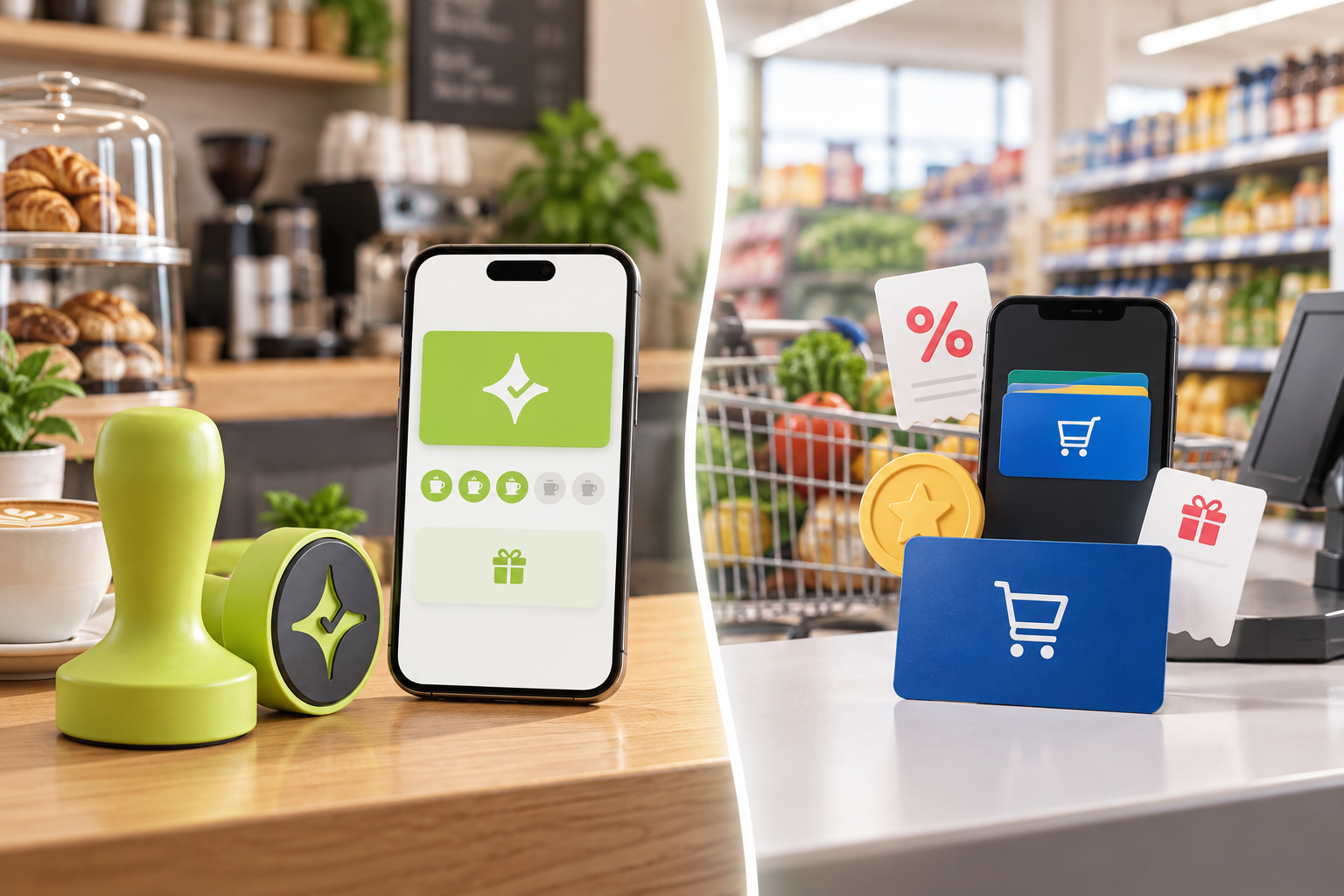
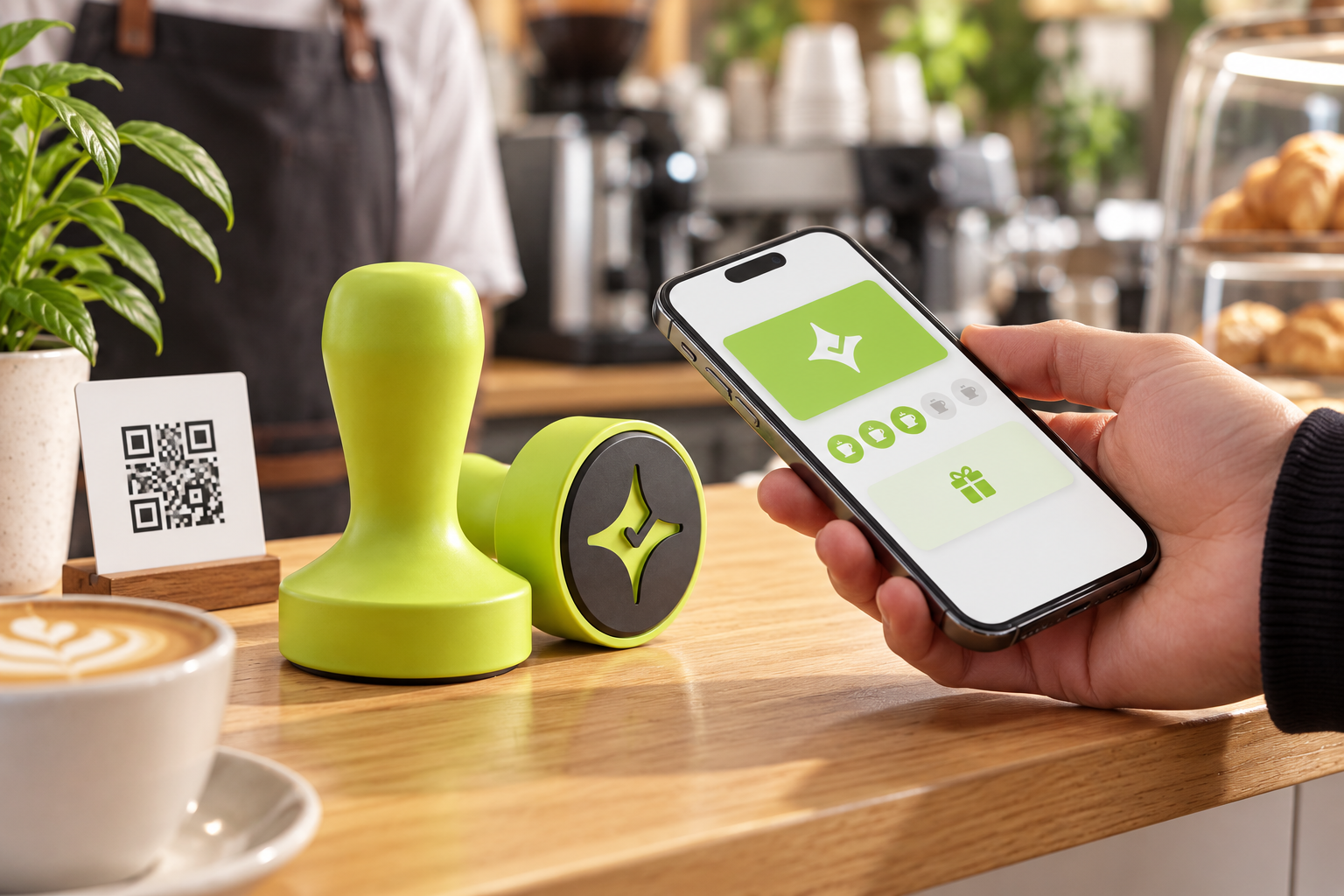

| Criterion | Çentik | Tesco Clubcard |
|---|---|---|
| Product type | Merchant-facing digital loyalty platform currently positioned publicly around coffee shops and cafés. | Tesco-operated consumer loyalty programme; not merchant SaaS. |
| Who operates the programme | The participating café or venue configures its own rewards and customer experience. | Tesco operates the Clubcard scheme for Tesco customers. |
| Customer access | Browser-based digital card with no required app download; Apple Wallet and Google Wallet are also supported on the public English site. | Plastic Clubcard, Tesco app and digital Clubcard; Tesco also documents adding the card to Apple Wallet or Google Wallet. |
| In-store identification | Physical Çentik NFC Stamp or QR workflow, both linked to the same digital loyalty card. | Customers can scan or tap their Clubcard at Tesco checkouts, depending on the supported format and checkout flow. |
| Core reward model | Digital stamps, configurable reward targets, intermediate rewards and multiple reward tiers are documented publicly. | Points convert into Clubcard vouchers; Tesco states that 150 points gives £1.50 in vouchers. Vouchers may also be exchanged with participating Reward Partners. |
| Member pricing | Çentik’s public pages focus on loyalty rewards and campaigns rather than supermarket-style SKU-level member pricing. | Clubcard Prices give members access to selected promotional prices on qualifying Tesco products. |
| Partner reward ecosystem | No comparable large public Reward Partner marketplace is currently documented on Çentik’s English public pages. | Tesco states that Clubcard vouchers can receive up to 2x value with 100+ Reward Partners. |
| Merchant CRM and analytics | Public features include customer profiles, regulars lists, active/lapsed segmentation, repeat-visit analytics, campaigns and detailed analytics. | Clubcard is part of Tesco’s own retail ecosystem; its customer data and loyalty infrastructure are not offered as an independent merchant dashboard. |
| POS requirement | Çentik states that it can operate independently of the till, so a café does not need to replace its current POS. | Clubcard is embedded in Tesco’s own retail and checkout environment rather than sold as a POS-independent product for outside venues. |
| Commercial access | 30-day trial with no credit card is consistently stated, but the English public pages currently display conflicting subscription prices and should be corrected before a UK pricing claim is published. | Clubcard consumer membership is free according to an independent MoneySavingExpert guide; it is not an independent-business loyalty subscription. |
| Portability | Çentik publicly documents moving an existing paper punch-card customer onto a chosen starting stamp count. | Tesco’s terms say Clubcard accounts, cards, coupons, points and vouchers cannot be transferred, bought, sold or traded. |
Where Tesco Clubcard sets a high consumer-experience benchmark
Clubcard combines several loyalty levers in one established retail journey: members can access Clubcard Prices, collect points, convert points into vouchers and use qualifying vouchers with Reward Partners. Tesco also supports physical and digital membership formats, including its app and mobile wallets. This breadth matters when designing loyalty for UK consumers because it demonstrates that loyalty can be more than a simple punch card: recognition, visible economic value and convenient access can operate together.
An independent MoneySavingExpert guide updated in July 2026 similarly describes Clubcard as free to join, usable through a physical or digital card, and based on collecting points that are converted into vouchers. That independently corroborates the basic consumer proposition without turning this comparison into a claim about Tesco’s overall commercial performance.
Where Çentik is more relevant to an independent café or local venue
The central difference is ownership of the programme. Çentik is software a venue can deploy for its own customers, while Tesco Clubcard is Tesco’s programme. Çentik’s public English pages describe an app-free browser experience, an NFC counter touchpoint, QR as an alternative flow, digital reward cards, customer profiles, campaigns, repeat-visit analytics, barista accounts and a QR menu. It also states that the loyalty workflow can run independently of the merchant’s till.
For a café trying to create a Clubcard-like habit loop without building a proprietary mobile app or replacing its checkout system, those characteristics are directly relevant. The comparison should not imply that Çentik reproduces Tesco’s supermarket pricing engine, partner network or retail scale. The more defensible proposition is narrower: Çentik gives an independent venue tools to create and operate its own repeat-visit programme.
NFC, QR and mobile wallets: similar convenience goals, different architecture
Both products reduce reliance on a traditional paper loyalty card, but they do so differently. Tesco documents a digital Clubcard in its app and support for Apple Wallet and Google Wallet, while customers may still use physical cards. Çentik says customers can open their loyalty card in the browser, save it to Apple Wallet or Google Wallet, and earn through an NFC Çentik Stamp or QR workflow. For venues that do not want to require a dedicated customer app, that browser-first path is one of the clearest structural differences.
Who is each option best for?
- Tesco Clubcard is for consumers shopping within Tesco and participating Clubcard relationships. It is appropriate to evaluate as a loyalty-experience benchmark, not as software an independent café can install.
- Çentik is relevant to independent cafés and similar repeat-visit businesses that want to operate their own digital reward card without forcing customers to download a dedicated app.
- A venue that primarily wants transaction-native product pricing, a nationwide partner rewards network or deep supermarket checkout integration should not assume Çentik currently reproduces Clubcard’s model.
- A venue that primarily wants NFC or QR loyalty, its own reward structure, customer profiles, campaigns and repeat-visit analytics without replacing its POS is closer to Çentik’s documented use case.
Limitations and trade-offs to verify before choosing
Tesco Clubcard’s biggest limitation in this buying context is straightforward: it is not an independent-business loyalty product. A café cannot simply subscribe to Clubcard and issue Tesco Clubcard points under its own brand. Conversely, Çentik does not currently document a Tesco-scale Reward Partner network, supermarket-wide member pricing system or equivalent consumer ecosystem on its public English pages.
Çentik also has two public-site inconsistencies that should be resolved before this page is used for paid acquisition or high-intent UK sales. At the time of research, the English homepage displayed US$9.99 per month, while the English pricing page displayed ₺999 per month per location. The homepage also says multi-location management is in progress, while the pricing page lists multi-location support. A prospective UK buyer should verify the current commercial price and exact multi-location capability directly with Çentik.
Decision criteria for a UK café or repeat-visit business
- Do you need a loyalty product that your own business can operate, or are you simply studying a major consumer programme as a benchmark?
- Do you want customers to participate without installing a dedicated app?
- Is a physical NFC touchpoint valuable at your counter, and do you also want QR as a fallback?
- Do you want a classic visit-and-reward mechanic, customer profiles, win-back or birthday campaigns and repeat-visit analytics?
- Must loyalty work without changing your existing POS?
- Do you require product-level member pricing, payment-linked earning or a broad external rewards marketplace? If so, verify whether another platform fits those requirements better.
- Do you operate multiple locations? Confirm Çentik’s current production multi-location capabilities because its public pages are presently inconsistent on this point.
- Before signing, confirm the live UK price, tax treatment, hardware arrangement, support terms and any data-import requirements directly with the provider.
Migration considerations: do not treat Clubcard data as portable merchant data
There is no ordinary merchant migration path from Tesco Clubcard to Çentik. Tesco’s terms state that Clubcard accounts, cards, points and vouchers cannot be transferred, bought, sold or traded, and Clubcard is a Tesco consumer scheme. An independent business should therefore never promise to import a shopper’s Tesco points, vouchers or Clubcard identity into its own programme.
The relevant Çentik migration case is instead a venue moving its own legitimate loyalty programme — for example, a paper punch card or another system whose customer records and balances the venue is entitled to process. Çentik publicly states that an existing paper punch-card customer can be given their current stamp count as a starting point. Before migrating identifiable customer records from any digital system, the merchant should document the data fields, reward balances, permissions and lawful basis it is entitled to carry across rather than assuming every historic field can be copied.
What an independent venue can learn from Clubcard
- Make value visible: Tesco combines points, vouchers and member prices rather than asking customers to remember an abstract loyalty promise.
- Reduce access friction: physical, app and wallet formats give Clubcard members several ways to identify themselves. Çentik can apply the same convenience principle through browser, NFC, QR and mobile wallets.
- Give customers a reason to return before the final reward: Çentik documents intermediate rewards and campaigns, which can be used to avoid making the programme feel like a distant finish line.
- Keep the programme operationally simple: for smaller venues, the useful goal is not to recreate Tesco’s infrastructure but to translate proven loyalty mechanics into something staff can run consistently.
Is Çentik an alternative to Tesco Clubcard?
Not in the sense of replacing Tesco Clubcard for Tesco shoppers. Clubcard is Tesco’s own consumer programme. Çentik is a merchant-facing loyalty platform that an independent venue can use to run its own programme. The useful comparison is between loyalty mechanics and customer experience, not between two interchangeable Tesco services.
Can a café offer Tesco Clubcard to its customers?
Tesco’s terms describe Clubcard as a Tesco consumer scheme and state that it is for personal and consumer use, not business transactions or purposes. An independent café should therefore treat Clubcard as a benchmark rather than a loyalty system it can subscribe to.
Do Çentik customers need to download an app?
Çentik’s English site says no dedicated app download is required: the digital card can open in the browser, and the customer can also add it to Apple Wallet or Google Wallet.
Does Tesco Clubcard work with Apple Wallet and Google Wallet?
Yes. Tesco’s help documentation explains how customers can add a digital Clubcard to Android devices through Google Wallet or to iOS devices through Apple Wallet.
Can Tesco Clubcard points be migrated into Çentik?
That should not be offered as a migration feature. Tesco’s terms state that Clubcard accounts, cards, points and vouchers cannot be transferred, bought, sold or traded. A legitimate migration into Çentik should concern loyalty records owned or lawfully controlled by the merchant itself.
How much does Çentik cost in the UK?
At research time, the homepage showed US$9.99 per month while the English pricing page showed ₺999 per month per location. Both pages advertise a 30-day free trial without a credit card.
Which is more suitable for an independent UK café?
The products serve different buyers. Tesco Clubcard is Tesco’s consumer programme and is not sold as loyalty software to independent cafés. Çentik is designed to be deployed by a venue itself, with NFC, QR, browser-based cards, campaigns and merchant analytics. The venue should still verify current pricing, multi-location readiness and any required integrations before adopting it.
Build your own repeat-visit programme
If you want a Clubcard-style reason for customers to come back without building a proprietary consumer app, explore Çentik’s NFC, QR and digital loyalty workflow. Verify current UK pricing and any multi-location requirements before launch.
Explore Çentik