
Çentik vs Antavo at a glance
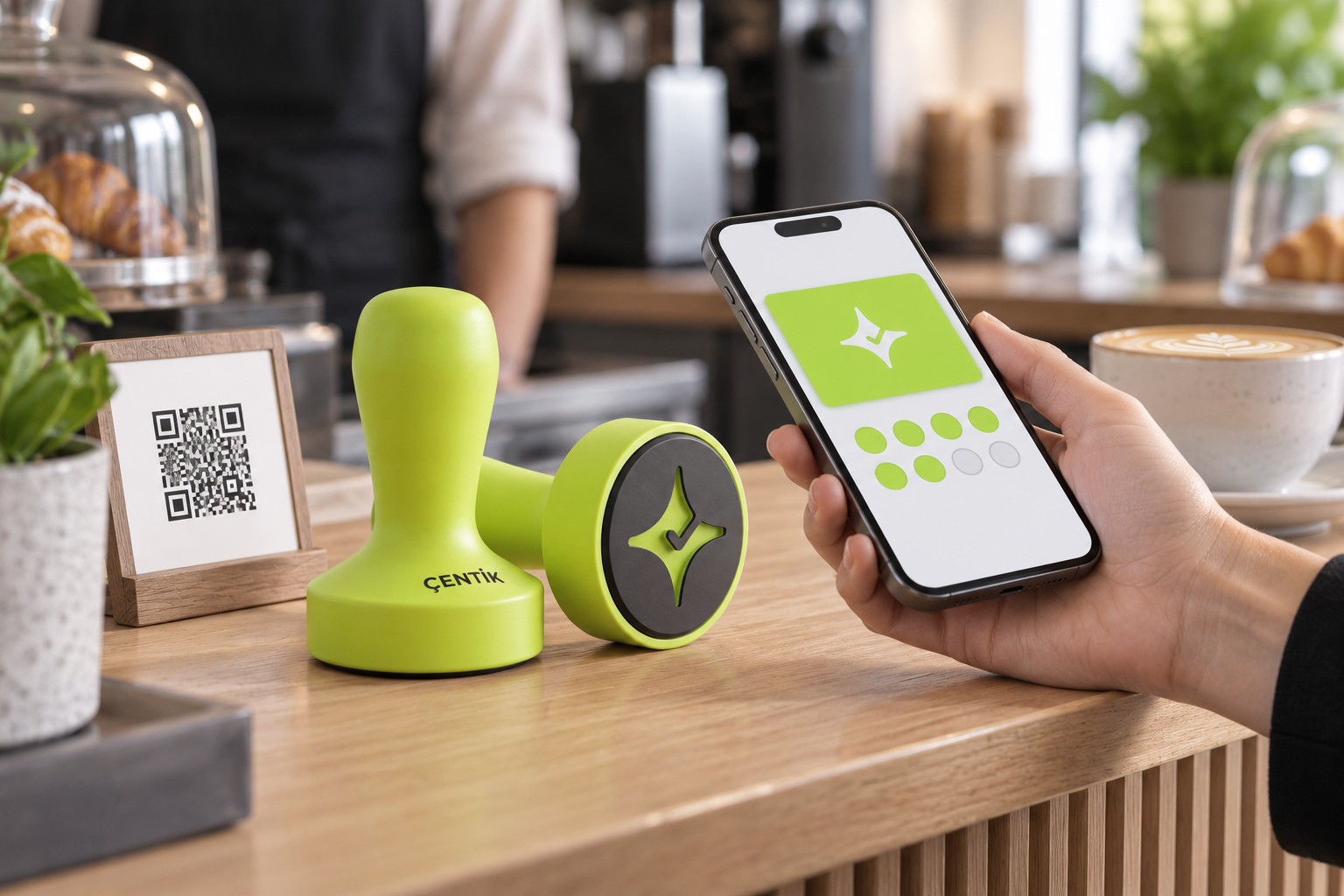
The products overlap on loyalty, rewards and mobile-wallet experiences, but their centre of gravity is different. Çentik is publicly positioned around a direct café workflow: the customer taps an NFC Çentik Stamp or uses QR, receives a browser-based digital card, and can add that card to Apple Wallet or Google Wallet without installing a dedicated app. Antavo spans Start, Grow and Enterprise use cases and exposes a headless, API-based loyalty engine for brands that want to connect loyalty with ecommerce, POS, CRM, CDP and other systems.


| Criterion | Çentik | Antavo |
|---|---|---|
| Primary fit | Independent cafés, coffee shops and repeat-visit local venues; the current English site is explicitly café-focused. | Brands needing configurable loyalty across ecommerce, retail, food and beverage and other sectors, including multi-market and multi-brand programmes. |
| Customer experience | No dedicated app required; browser-based card plus Apple Wallet and Google Wallet. | Headless/API-based platform; customer-facing experiences are built through APIs, while Antavo also supports embedded experiences and Apple Wallet/Google Wallet passes. |
| In-store earning | Physical NFC Çentik Stamp plus QR, operating independently of the merchant's till. | Event-driven loyalty designed to receive data from POS, ecommerce, ERP and other systems through APIs and integrations; receipt scanning is also part of Antavo's product set. |
| Loyalty mechanics | Public pages verify digital stamps, multiple reward tiers, visit history, customer profiles and campaigns such as double stamps, first-visit, win-back and birthday. | Multiple loyalty currencies, spend- or point-based tiers, challenges, missions, badges, streaks, referrals, clubs and other gamified mechanics. |
| Automation | Focused merchant campaigns and repeat-visit analytics for a relatively simple venue workflow. | No-code visual workflows with triggers, filters, branching logic, rewards, segmentation, A/B testing and budget controls. |
| Integrations | Designed to work without replacing or connecting to the existing POS for the core stamp flow. | API-first, with pre-built integrations and webhooks for CRM, CDP, ecommerce and other systems. |
| Implementation | Çentik markets the core café service as app-free and ready in minutes. | Antavo says launch time depends on complexity: focused programmes can take weeks, while multi-market and integration-heavy setups take longer and require technical support during setup. |
| Pricing visibility | No public numeric list price was found. Antavo says charges are based on customer activity; Capterra lists implementation and licence fees as custom quote. | |
| Programme complexity | More directly aligned to a lightweight venue rollout; the public site currently contains conflicting multi-location wording, so exact availability should be confirmed. | Designed to support programmes across markets, brands, currencies and languages with API-led orchestration. |
The main difference: venue loyalty product vs loyalty infrastructure
Antavo should not be treated as a simple digital stamp-card substitute. Its strongest differentiation is the configurable loyalty engine underneath the customer experience: multiple currencies, tier rules, no-code workflows, gamification, integrations and event-driven APIs. Its developer documentation describes the platform as headless and states that it does not provide a dedicated frontend; customer-facing experiences are delivered through its APIs.
Çentik takes a more packaged approach for its current café use case. The customer-facing journey is already part of the product: tap or scan at the counter, open the loyalty card in the browser, optionally add it to Apple Wallet or Google Wallet, and let the merchant manage stamps, customers, campaigns and analytics from the business side. The core workflow does not require replacing the till.
Where Antavo is materially stronger
- Complex loyalty design: multiple custom currencies, sophisticated tier logic, challenges, missions, badges, streaks, clubs and referrals.
- Workflow depth: Antavo's visual Workflows module can combine triggers, filters, segmentation, rewards, messaging actions, A/B testing and campaign budget controls.
- Integration architecture: Antavo is API-first and supports real-time connections through REST APIs, webhooks and pre-built integrations.
- Multi-market programmes: Antavo says it supports multi-currency point economies, region-specific rules, translations and multi-brand programmes.
- Data operations: Antavo publishes API access, imports, exports and customer lifecycle controls as part of its data-management model.
Where Çentik can be the simpler operational fit
- App-free onboarding: customers can use the loyalty card in the browser and add it to Apple Wallet or Google Wallet.
- Visible counter interaction: the physical NFC Çentik Stamp and QR flow create a dedicated loyalty touchpoint without requiring a POS migration.
- Packaged customer journey: the card, merchant dashboard, campaigns and analytics are part of the product rather than a frontend that must be built around a headless engine.
- QR Menu adjacency: Çentik publicly includes QR Menu Pro alongside loyalty.
- Till independence: Çentik's public FAQ states that its core flow runs independently of the merchant's till.
In-store experience: physical ritual vs integration-led earning
For a café or another repeat-visit venue, Çentik makes the loyalty interaction visible at the counter through its NFC Stamp or QR flow. That suits merchants looking for a simple staff-and-customer ritual without changing the POS. Antavo can also support physical-store loyalty, but its architecture is built to ingest events from POS, ecommerce, ERP and other systems, so the exact in-store journey depends more heavily on the brand's implementation and integrations.
Wallets and app requirements
Both platforms can support Apple Wallet and Google Wallet, so wallet support alone does not distinguish them. Çentik combines those wallets with a browser-first loyalty card and explicitly says no app download is required. Antavo supports mobile-wallet passes and embedded experiences, but its core platform is headless, leaving the brand to decide how the frontend is delivered.
Pricing and implementation
Antavo does not publish a numeric list price on the pricing page reviewed for this comparison. It says pricing is based on customer activity, while Capterra currently lists implementation and licence fees as custom quote. Antavo also states that technical support is required during setup for integrations and that implementation time varies with programme complexity.
Çentik is positioned as a lower-complexity product, but its public English pricing should be canonicalised before this comparison publishes a fixed UK amount: the homepage and pricing page currently show different currencies and values.
What independent reviews suggest about Antavo
Independent review sites are broadly positive but have small samples. Capterra showed a 4.4/5 overall rating from 19 reviews when last updated on 16 September 2026, while G2 showed 4.2/5 from 6 reviews in the result reviewed here. Reviewers frequently praise flexibility and support; individual reviewers have also mentioned onboarding or integration delays, ticket-response friction and reporting limitations. These are useful buying signals, not statistically representative conclusions.
Who each option is best for
Çentik is most directly aligned with
- Independent cafés and small repeat-visit venues that want digital loyalty without replacing their POS.
- Operators that want an app-free journey with browser access plus Apple Wallet and Google Wallet.
- Businesses that value a visible NFC/QR counter interaction and a straightforward stamp-led reward model.
- Small teams that prefer a packaged loyalty, campaign, analytics and QR-menu workflow over an enterprise integration project.
Antavo is most directly aligned with
- Retail, ecommerce, QSR, hospitality and other brands requiring sophisticated loyalty mechanics across channels.
- Organisations operating multiple markets, brands, currencies or regional programme rules.
- Teams that need loyalty to integrate deeply with CRM, CDP, ecommerce, POS and marketing systems.
- Programmes requiring complex tier logic, gamification, custom workflows, event-driven automation and dedicated implementation resources.
Limitations and checks before buying
- Çentik is currently much narrower than Antavo in enterprise programme design. Buyers needing multiple loyalty currencies, advanced gamification, complex multi-brand logic or deep orchestration should not assume Çentik is a like-for-like Antavo replacement.
- Çentik's English site currently contains inconsistent pricing and conflicting multi-location messaging: its feature list says multi-location support, while the FAQ says multi-location management is in progress. Confirm both before signing or publishing claims.
- Antavo's public pricing is not numerically transparent. UK buyers should request the complete commercial model, including implementation, activity-based charges, support, integrations, environments and professional services.
- Antavo's headless model provides flexibility but places more importance on implementation ownership. Confirm who is responsible for frontend work, systems integration, QA, migration and ongoing operations.
- Independent review samples for Antavo remain small, so reference calls with comparable customers should complement review-site ratings.
Migration considerations from Antavo to Çentik
A migration should be scoped around programme semantics, not merely data export. At minimum, map customer identifiers, current points or stamp balances, reward entitlements, tier status, redemption state, consent evidence, suppression status and any history that still has a legitimate operational purpose. Antavo documents API and JSON/CSV export paths, but not every Antavo construct will have a one-to-one equivalent in a simpler Çentik programme.
Multi-currency economies, clubs, complex tiers, challenges and event-driven rules may need to be simplified, retired or converted into a smaller set of balances and rewards. Agree acceptance criteria before cut-over: which balances survive, which rewards remain valid, how duplicate identities are handled, whether any customers need fresh permission, and when the previous programme stops accepting activity.
UK privacy and marketing requirements also matter. ICO guidance says unsolicited electronic marketing to individual subscribers generally requires consent unless a relevant soft opt-in applies. The ICO also explains that data-portability rights can apply to certain personal data supplied by individuals, and that restricted international transfers require an appropriate transfer mechanism when the UK GDPR transfer rules apply. This is compliance guidance, not legal advice.
Decision criteria for a UK buyer
- Choose the product model first: packaged venue loyalty or configurable loyalty infrastructure.
- List every customer touchpoint that must earn or redeem value: counter, ecommerce, app, POS, receipt, wallet, kiosk or partner channel.
- Decide whether loyalty should remain independent of the POS or become transaction-native inside the commerce stack.
- Document the mechanics you genuinely need: stamps, points, spend rules, tiers, clubs, referrals, challenges, multiple currencies and regional rules.
- Request the complete commercial picture: licence, usage, implementation, integrations, support, environments and migration.
- Validate exports, consent records, suppression lists, UK GDPR roles, hosting locations and any international-transfer requirements.
- Run a migration proof with real customer balances and reward states before committing to cut-over.
Is Antavo a direct alternative to Çentik?
Only partly. Both can power loyalty and mobile-wallet experiences, but Antavo is a configurable headless loyalty platform for integrated and often complex programmes, while Çentik is currently a packaged, café-oriented product built around a direct NFC/QR customer journey.
Does Antavo require customers to download an app?
No. Antavo supports Apple Wallet and Google Wallet and can embed loyalty into web or app experiences. Its core platform is headless, so the brand chooses the frontend rather than Antavo requiring one specific consumer app.
Can both platforms use Apple Wallet and Google Wallet?
Yes. Çentik publicly supports both wallets, and Antavo's Mobile Wallet module supports Apple Wallet and Google Wallet.
Which platform is more suitable for a single independent café?
For a single venue wanting app-free stamps, NFC/QR at the counter and no POS replacement, Çentik is more directly aligned with that operating model. Antavo can start simpler than a full enterprise rollout, but its principal differentiation is configurability, integrations and programme depth.
How much does Antavo cost in the UK?
A numeric UK list price was not published on the Antavo pricing page reviewed here. Antavo says pricing is based on customer activity; Capterra lists implementation and licence fees as custom quote. Ask Antavo for a current proposal based on your member base, channels and implementation scope.
Can an Antavo programme be migrated to Çentik?
Potentially, but do not assume a one-to-one conversion. Identities, balances, rewards and consent records can be mapped, while complex Antavo constructs such as multiple currencies, advanced tiers, clubs, challenges or custom workflows may need simplification. Antavo documents API and CSV/JSON export options that can support extraction.
See whether Çentik fits your venue
If you want app-free loyalty with NFC or QR and do not want to rebuild your commerce stack, review the current Çentik flow and confirm the UK pricing and multi-location requirements for your rollout.
Explore Çentik