
Quick answer: these products solve different loyalty problems
Eagle Eye AIR is not simply a digital stamp-card app. Eagle Eye positions AIR as enterprise transactional infrastructure for loyalty, promotions, gifting and personalisation, connected to a retailer’s existing channels through APIs and integrations. Its developer documentation says Real-Time Loyalty can support anything from a simple stamp card to multi-tier points, with customer wallets, ledgers, earn-and-burn rules, personalisation and reporting.
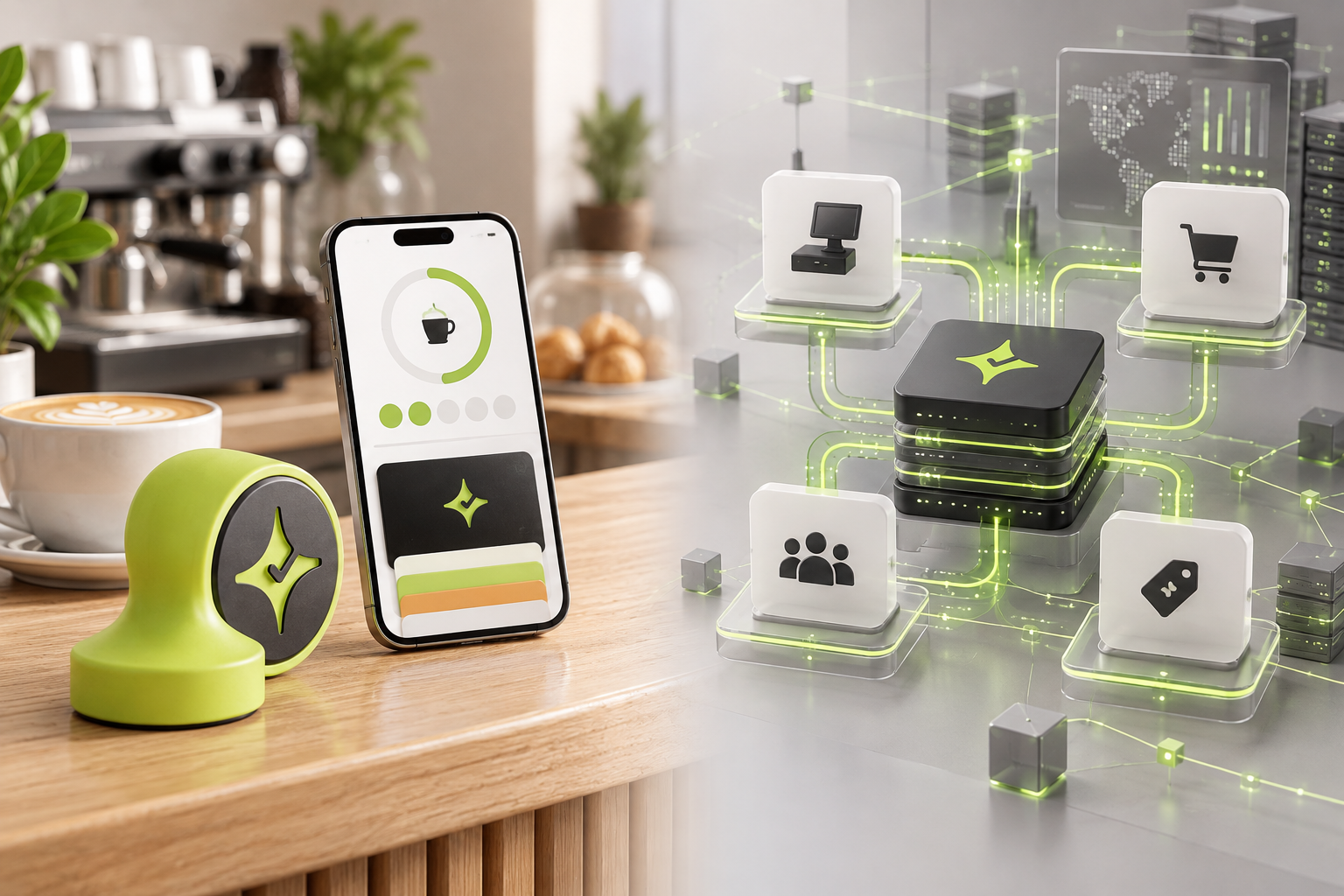
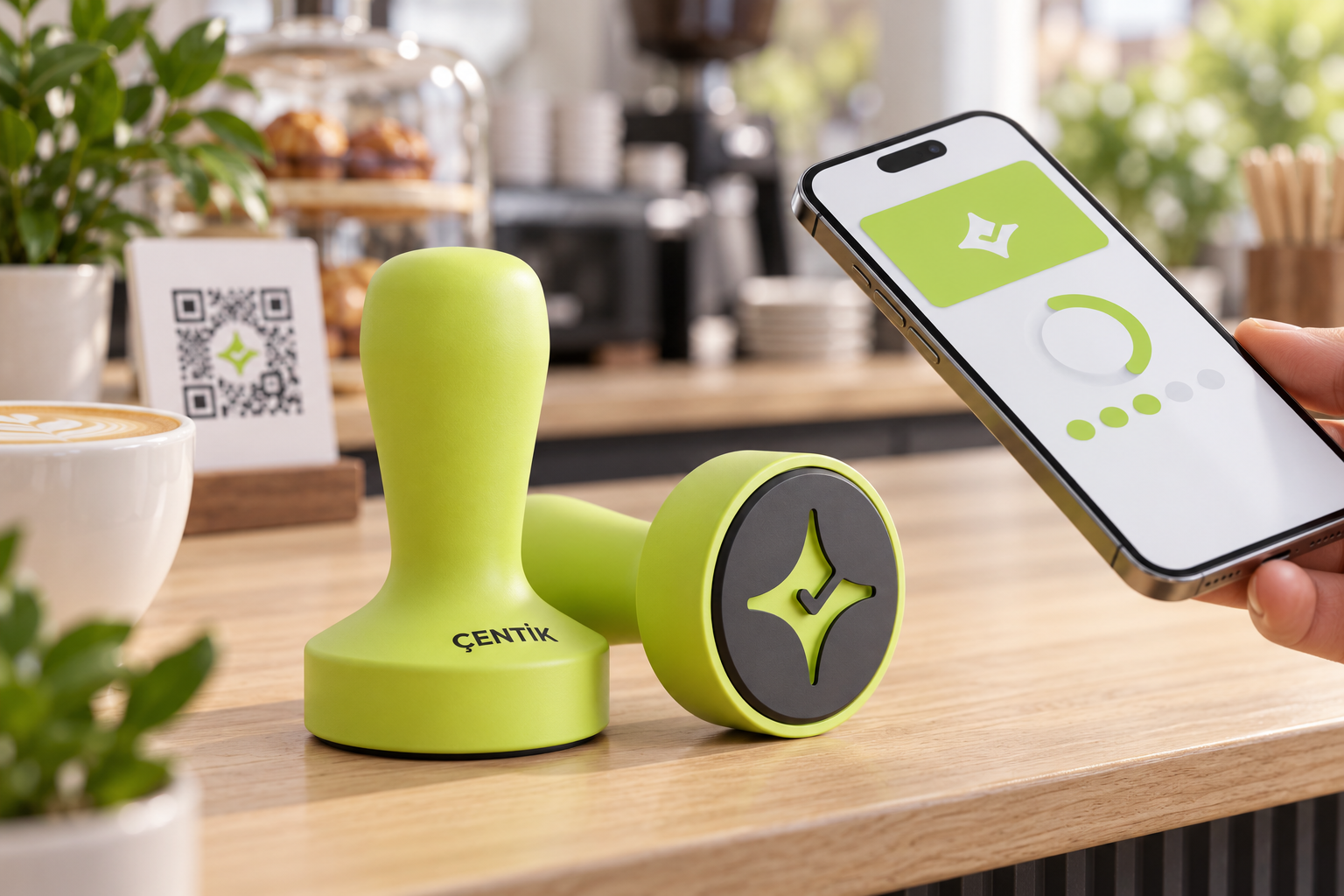

Çentik is currently positioned much closer to the merchant and counter experience: customers can use a browser-based digital loyalty card without installing an app, add it to Apple Wallet or Google Wallet, and earn via a physical Çentik Stamp NFC point or QR. Çentik also states that it can run independently of the merchant’s POS.
For a UK independent café, bakery, bar, restaurant or small multi-site group that wants to launch loyalty without a major integration project, Çentik is the more directly aligned product category. For a large retailer or hospitality group that needs real-time transaction adjudication, complex earn-and-burn logic, omnichannel promotions and deep integration across POS, ecommerce, CRM and marketing systems, Eagle Eye AIR is designed for that enterprise scope. This is a fit assessment, not a claim that one platform is universally superior.
Çentik vs Eagle Eye AIR at a glance
| Criterion | Çentik | Eagle Eye AIR |
|---|---|---|
| Primary fit | Independent and repeat-visit local businesses; public site is strongly café-focused | Enterprise retailers and consumer-facing brands operating across complex channels |
| Customer experience | Browser-based loyalty card; Apple Wallet and Google Wallet support; no dedicated app required | AIR powers loyalty behind retailer-owned touchpoints; the end-customer interface depends on each retailer implementation |
| In-store earning | Physical NFC Çentik Stamp plus QR; barista/staff workflow | API/POS-connected real-time loyalty; flexible earn logic and transaction adjudication |
| Loyalty depth | Digital stamps, reward tiers, customer profiles, campaigns and repeat-visit analytics are publicly documented | Customer wallet, loyalty ledger and tiers, 100+ out-of-the-box earn types, burn rules, personalisation and reporting are documented |
| POS approach | Can run independently of the existing POS | Designed to integrate with POS, ecommerce, CRM, payments and marketing ecosystems |
| Promotions/personalisation | SMB campaign templates such as double stamps, win-back and birthday campaigns are publicly listed | Enterprise omnichannel promotions and 1-to-1 personalisation are core platform capabilities |
| Scale and infrastructure | Public positioning is SMB/local-business oriented; no comparable enterprise throughput claims reviewed | Eagle Eye says AIR operates across more than 90,000 connected stores and executes more than 1.7 billion personalised offers per week |
| Security/compliance evidence | Eagle Eye states ISO 27001:2022 certification, ISAE 3402 Type 2 audit coverage and a 24/7 SOC | |
| Pricing visibility | 30-day free trial is public; the current English pricing page lists Turkish-lira pricing, so UK pricing should be verified/localised before publishing | No standard list price was displayed on the reviewed AIR product pages; Eagle Eye routes pricing enquiries through sales |
| Typical buying motion | Self-serve/light-touch onboarding is publicly promoted | Demo and sales-led enterprise evaluation |
Sources for the table: Çentik’s English product, pricing and how-it-works pages; Eagle Eye’s AIR platform, Real-Time Loyalty developer documentation, integrations, security and contact pages.
What Eagle Eye AIR is built to do
AIR is an API-first, composable loyalty and promotions platform. Eagle Eye describes it as a transactional layer that connects in-store and online channels in real time. Its published product set includes Real-Time Loyalty, Omnichannel Promotions and Gifting & Top-Up, with add-ons such as subscriptions and messaging documented in its developer materials.
The loyalty engine is materially deeper than a standard stamp-card tool. Eagle Eye’s developer documentation describes a customer wallet, loyalty ledger and tiers, more than 100 out-of-the-box earn types, configurable burn rules, personalised offer values, promotion-budget tracking and real-time reporting.
Its integration catalogue also shows the intended deployment model: AIR can sit alongside POS, ecommerce, CRM, payments and marketing tools, with examples including Oracle Simphony, Zonal, Tevalis, Salesforce Commerce Cloud, Braze, Bloomreach, Stripe and other partner systems.
Where Çentik fits differently
Çentik starts from a smaller merchant problem: make repeat-visit loyalty easy to launch and easy for a customer to use at the counter. Its public flow does not require a dedicated customer app. The loyalty card opens in the browser, can be added to Apple Wallet or Google Wallet, and is updated through an NFC tap or QR workflow.
That makes Çentik attractive when the buyer does not want loyalty to become a POS replacement or a broader digital-transformation programme. Çentik explicitly says it runs independently of the POS, while its public Pro plan includes digital loyalty, customer management, campaigns, analytics, QR Menu Pro, barista accounts and multi-location support.
Best fit for Çentik
- Independent cafés, bakeries, dessert shops, bars, restaurants and other repeat-visit venues that want a visible counter loyalty ritual without asking customers to install another app.
- Operators that want to keep their current till or payment provider and add a separate loyalty layer.
- Small multi-site groups that value NFC/QR earning, digital wallet access, staff accounts, campaign templates and repeat-visit analytics more than enterprise-grade offer orchestration.
- Teams that want to test quickly with a public 30-day trial rather than begin with a formal enterprise procurement and integration programme.
Best fit for Eagle Eye AIR
- Retailers and hospitality groups with large transaction volumes and multiple customer channels.
- Organisations that need central loyalty ledgers, tiers, complex earn-and-burn logic, partner or supplier-funded promotions, stored value or broader promotion infrastructure.
- Enterprises that need loyalty to connect deeply with POS, ecommerce, CRM, CDP, payment and marketing systems through APIs and pre-built integrations.
- Buyers that require documented enterprise security controls and operational support; Eagle Eye states ISO 27001:2022 certification, ISAE 3402 Type 2 coverage and 24/7 security monitoring.
In-store experience: physical tap versus enterprise transaction layer
Çentik makes the physical counter interaction part of the product. The customer can tap the branded NFC Çentik Stamp or use QR, while the same digital loyalty card remains accessible in the browser and supported mobile wallets. That is useful when the venue wants loyalty to be visible and understandable to staff and customers without changing the till.
Eagle Eye AIR takes a different approach. Its value is in real-time loyalty logic behind the retailer’s channels, particularly when the transaction itself needs to trigger complex earning, redemption or personalised promotion rules. Eagle Eye does not present a Çentik-style branded NFC counter device as a standard AIR merchant workflow on the pages reviewed; that should not be interpreted as meaning NFC could never be implemented through a retailer’s wider stack.
Integrations, POS dependency and implementation effort
Çentik’s public proposition is intentionally POS-independent. That reduces the dependency on till integrations for a basic rollout, although merchants should still test staff workflow, fraud controls, redemption handling and reporting before scaling.
AIR is built for integration. Eagle Eye documents an API-first architecture, pre-built connectors and a broad technology-partner ecosystem. For organisations with an integration team, systems integrator or established enterprise architecture, this creates more headroom. For a small venue, the same breadth may be unnecessary. Implementation time, professional-services scope and total cost should be confirmed directly with Eagle Eye rather than inferred from marketing pages.
Scale, security and vendor maturity
Eagle Eye publicly states that AIR supports more than 90,000 connected stores and executes more than 1.7 billion personalised offers each week. Its security page states ISO 27001:2022 certification, ISAE 3402 Type 2 audit coverage, Google Cloud hosting and a 24/7 Security Operations Centre. These are meaningful enterprise procurement signals.
Independent public-market disclosures also show current commercial scale: Eagle Eye’s FY26 final results reported £44.5 million in annual recurring revenue excluding the lost NRS contract, 13 major customer wins across three continents, and new wins including easyJet and Subway. These figures do not make the product automatically suitable for every buyer, but they support the assessment that Eagle Eye is an established enterprise vendor rather than an early-stage SMB loyalty tool.
Çentik’s public materials do not currently evidence comparable enterprise throughput, certification or global-support claims. For a national retailer running mission-critical loyalty, that gap matters. For a local operator choosing a lightweight counter-based programme, those enterprise credentials may be less decisive than time to launch, staff simplicity and POS independence.
Pricing: do not force an apples-to-apples number
A responsible public comparison should not invent a price for Eagle Eye AIR. The reviewed Eagle Eye product pages do not show a standard list price, and the contact flow explicitly routes pricing enquiries to sales.
Çentik publicly offers a 30-day free trial, but its current English pricing page displays Turkish-lira pricing rather than a UK-localised GBP offer. Until then, the defensible comparison is buying motion and pricing visibility, not a claim that one product is cheaper.
Limitations and trade-offs
- Çentik limitation: the public proposition is focused on cafés and lightweight venue loyalty. The reviewed public pages do not evidence the same breadth of enterprise loyalty rules, omnichannel promotion infrastructure, integration catalogue or security attestations documented by Eagle Eye.
- Eagle Eye AIR limitation for smaller merchants: the platform is explicitly enterprise-oriented and integration-led. A small venue may not need its full architecture, and standard public pricing is not shown on the reviewed pages.
- Çentik limitation for UK publishing: the English pricing page is not yet UK-localised, so a GBP price and commercial terms should be confirmed before using price-led comparison copy.
- Eagle Eye comparison limitation: AIR is infrastructure powering a retailer’s own customer journeys, so features such as a browser card, wallet pass, app or NFC experience can depend on the retailer’s implementation rather than a single standard end-user interface.
Migration from Eagle Eye AIR to Çentik: simplify deliberately, do not assume feature parity
For an organisation leaving AIR, migration should begin with a capability map rather than a raw data export. Complex tiers, partner earn/burn rules, promotion budgets, subscriptions, gifting, personalised offer logic and channel-specific integrations may not have one-to-one equivalents in Çentik’s current public product. The migration goal may therefore be to preserve the parts a smaller venue actually needs: customer identity, loyalty balance or progress, reward entitlement, venue relationship and valid marketing permissions.
- Inventory customer identifiers and decide the canonical key used after migration.
- Map current points, stamps, tiers, rewards, expiry dates and outstanding entitlements; document anything that will not transfer.
- Preserve an auditable ledger or archive of legacy balances and redemptions for dispute handling.
- Separate operational loyalty data from marketing permissions; a loyalty account does not automatically equal consent for every email or text campaign.
- Carry forward suppression and opt-out records so people who previously objected are not reactivated accidentally.
- Run a reconciliation sample before cutover, then test earn, redeem, reversal and edge cases with staff.
- Communicate any material change in programme rules, reward value or expiry terms clearly to customers before launch.
- Keep a rollback plan and a dated export of the legacy programme until the new balances and permissions are reconciled.
UK GDPR and PECR considerations
UK loyalty migrations involve more than balances. If customer data will be used for email or text marketing, PECR and UK GDPR rules matter. The ICO says organisations generally need valid consent for unsolicited electronic marketing to individuals unless an applicable soft opt-in applies, and recommends keeping records of who consented, when and how. A migration should therefore preserve consent evidence and suppression status rather than treating all loyalty members as marketable contacts.
Neither this comparison nor a vendor’s marketing page substitutes for legal review. Before moving UK customer data, confirm the controller/processor roles, data locations, transfer mechanism where relevant, retention policy, privacy notices, deletion workflow and contractual data-processing terms for the actual deployment.
Decision criteria for a UK buyer
- Choose the operating model first: lightweight venue loyalty or enterprise loyalty infrastructure.
- Count the systems that must participate in real time: POS, ecommerce, CRM, app, website, payments, CDP and marketing automation.
- Define the loyalty economics: simple visits and rewards, or complex tiers, earn/burn rules, supplier funding, stored value and personalisation.
- Decide whether a visible physical counter interaction is a product requirement or whether loyalty should be mostly transaction-native.
- Require a migration proof: customer count, balances, entitlements, opt-outs and reconciliation totals before signing off cutover.
- Compare total implementation cost, not just licence price: integration, professional services, internal engineering, support, staff training and hardware all matter.
- For UK deployment, verify the live commercial terms, privacy notices, data-processing agreement and marketing-consent design before launch.
Verdict by use case
Çentik is the more natural shortlist candidate when the job is to launch an app-free, visible loyalty experience for an independent or small multi-site venue while keeping the current POS. Eagle Eye AIR is the more natural shortlist candidate when the job is to operate loyalty and promotions as enterprise transaction infrastructure across many channels, stores and systems. A growing chain can reasonably evaluate both, but it should decide whether it needs enterprise orchestration now or a simpler loyalty layer that can be deployed with less dependency on integrations.
Frequently asked questions
Is Çentik a direct replacement for Eagle Eye AIR?
Not in every deployment. Çentik can replace a simpler loyalty use case, but AIR supports enterprise capabilities such as complex loyalty ledgers, tiers, broad earn-and-burn rules, omnichannel promotions and deep integrations. An AIR migration should be mapped feature by feature before any replacement claim is made.
Which is more suitable for an independent UK café?
Çentik is closer to that buying need because its public product is built around app-free browser loyalty, Apple Wallet and Google Wallet, NFC/QR counter interactions and POS-independent setup.
Which is more suitable for a national retailer?
Eagle Eye AIR is designed for enterprise retailers operating across complex physical and digital channels, with API-first integration, real-time loyalty and promotions, and documented enterprise security controls.
Does Eagle Eye AIR support simple loyalty as well as complex programmes?
Yes. Eagle Eye’s developer documentation says Real-Time Loyalty can support use cases from simple stamp cards through multi-tier points schemes, with configurable earn and burn rules.
Does Eagle Eye AIR include the same kind of branded NFC counter device as Çentik?
The reviewed Eagle Eye pages emphasise API, POS and ecosystem integrations rather than a standard branded merchant NFC stamp device. That is not proof that NFC could not be delivered through an implementation; it means buyers should ask Eagle Eye how any required physical tap experience would be designed.
Which platform is cheaper?
The public evidence is not sufficient for a responsible like-for-like answer. Eagle Eye does not display a standard AIR list price on the reviewed pages, while Çentik’s English pricing is currently shown in Turkish lira rather than a UK-localised GBP offer. Compare confirmed proposals and implementation costs for the same scope.
What should be migrated first when moving loyalty platforms?
Start with customer identity, current loyalty progress or balances, outstanding rewards, expiry rules, opt-out/suppression status and evidence of marketing permissions. Complex AIR-specific rules should be mapped separately rather than assumed to have a direct equivalent.
Need a lighter loyalty layer for your venues?
If you want app-free browser loyalty, Apple Wallet and Google Wallet access, a visible NFC/QR counter flow and the ability to keep your existing POS, review Çentik’s live product and confirm UK commercial terms before rollout.
Explore Çentik