
Çentik vs Epsilon: The Quick Verdict
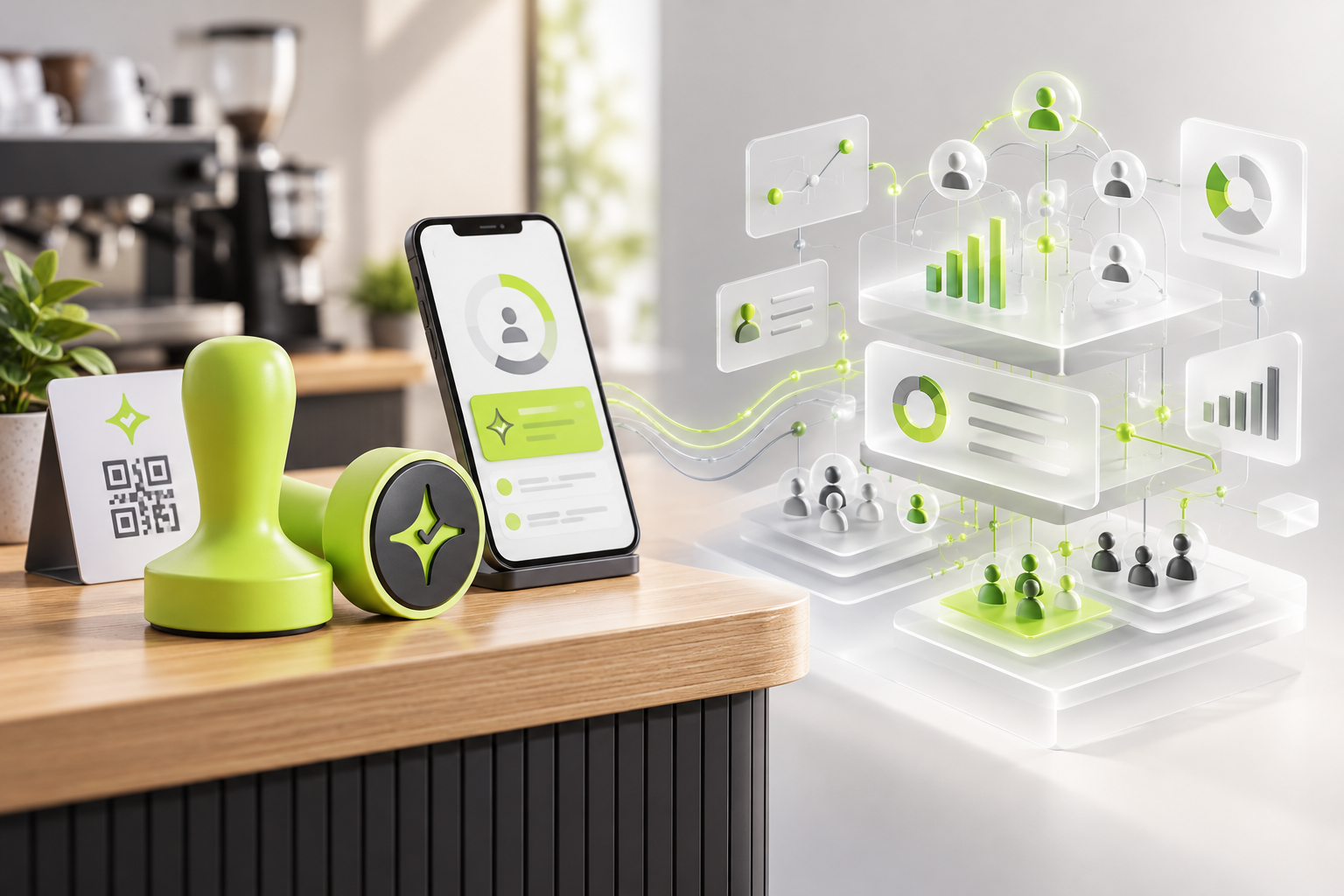
Çentik is the more natural starting point for a small, customer-facing business that wants to introduce digital rewards through straightforward NFC and QR interactions. Its loyalty model supports both count-based rewards and balance-based programs, making it relevant to coffee shops, bakeries, and other businesses with frequent in-person purchases. Epsilon is a stronger candidate when the priority is sophisticated customer data management, personalized offers, loyalty program configuration, and coordination across a larger marketing ecosystem. Epsilon also advertises Starter, Standard, and Enterprise offerings, so it should not be treated as exclusively an enterprise product. The deciding question is whether the business primarily needs a practical point-of-visit loyalty experience or a broader customer engagement platform.[1][2][3]
Çentik vs Epsilon: Feature Comparison
| Criterion | Çentik | Epsilon |
|---|---|---|
| Primary focus | Digital customer loyalty for businesses using NFC and QR interactions | Loyalty management, customer intelligence, personalization, and marketing orchestration[2] |
| Best-fit buyer | Independent coffee shops, bakeries, and other visit-driven businesses | Brands seeking configurable loyalty programs and data-driven customer engagement[2] |
| Count-based rewards | Supports visit or stamp-count rewards | Offers configurable loyalty programs; specific count-based configuration should be confirmed[2] |
| Balance-based loyalty | Supports granting loyalty balances through NFC or QR interactions | Offers broader rewards and loyalty management capabilities; balance behavior depends on program design[2] |
| NFC customer interaction | NFC is a core in-store loyalty interaction | A comparable NFC counter interaction is not specified in the reviewed product documentation |
| Counter QR workflow | A POS interface can display a QR code that grants a count or loyalty balance | A comparable counter-displayed QR workflow is not specified in the reviewed documentation |
| Transaction-dependent rewards | An optional QR flow can grant a balance determined by the amount received from the POS | Supports data-driven loyalty decisioning; specific transaction workflows require configuration review[2] |
| Personalization | Supports loyalty campaigns and customer engagement | Emphasizes customer data enrichment, segmentation, and personalized member journeys[1][2] |
| AI-assisted decisioning | No comparable enterprise AI decisioning capability established | Describes AI-driven insights and recommendations for loyalty decisions[2] |
| Program tiers | Count and balance reward models | Publishes Starter, Standard, and Enterprise platform offerings[2] |
| Implementation emphasis | Merchant-operated in-store loyalty workflows | Configuration, hosting choices, support options, and potentially complex integrations[2] |
| Published pricing | $19.99/month for the first location | AWS Marketplace lists a 12-month Loyalty Platform offering starting at $30,000; pricing depends on contract terms[4] |
| Main consideration | Confirm operational fit, hardware setup, and POS-related requirements | Evaluate configuration, procurement, integration scope, and total contract cost |
These are different categories of loyalty investment. Çentik has a published first-location monthly subscription price, while the cited Epsilon AWS Marketplace figure applies to a specific marketplace offering and contract structure. It should not be interpreted as the price of every Epsilon deployment or as a directly equivalent subscription.[4]
What Is Çentik?
Çentik is a digital loyalty platform designed around everyday interactions between a business and its returning customers. Its approach connects a physical visit or eligible purchase with an easily accessible digital reward experience. Businesses can use NFC touchpoints or QR codes to grant progress toward a count-based reward or to add to a loyalty balance. This makes Çentik relevant to businesses that want loyalty to become part of their normal counter experience rather than a separate, complicated marketing project.[3]
How Çentik's NFC, QR, and Balance Rewards Work
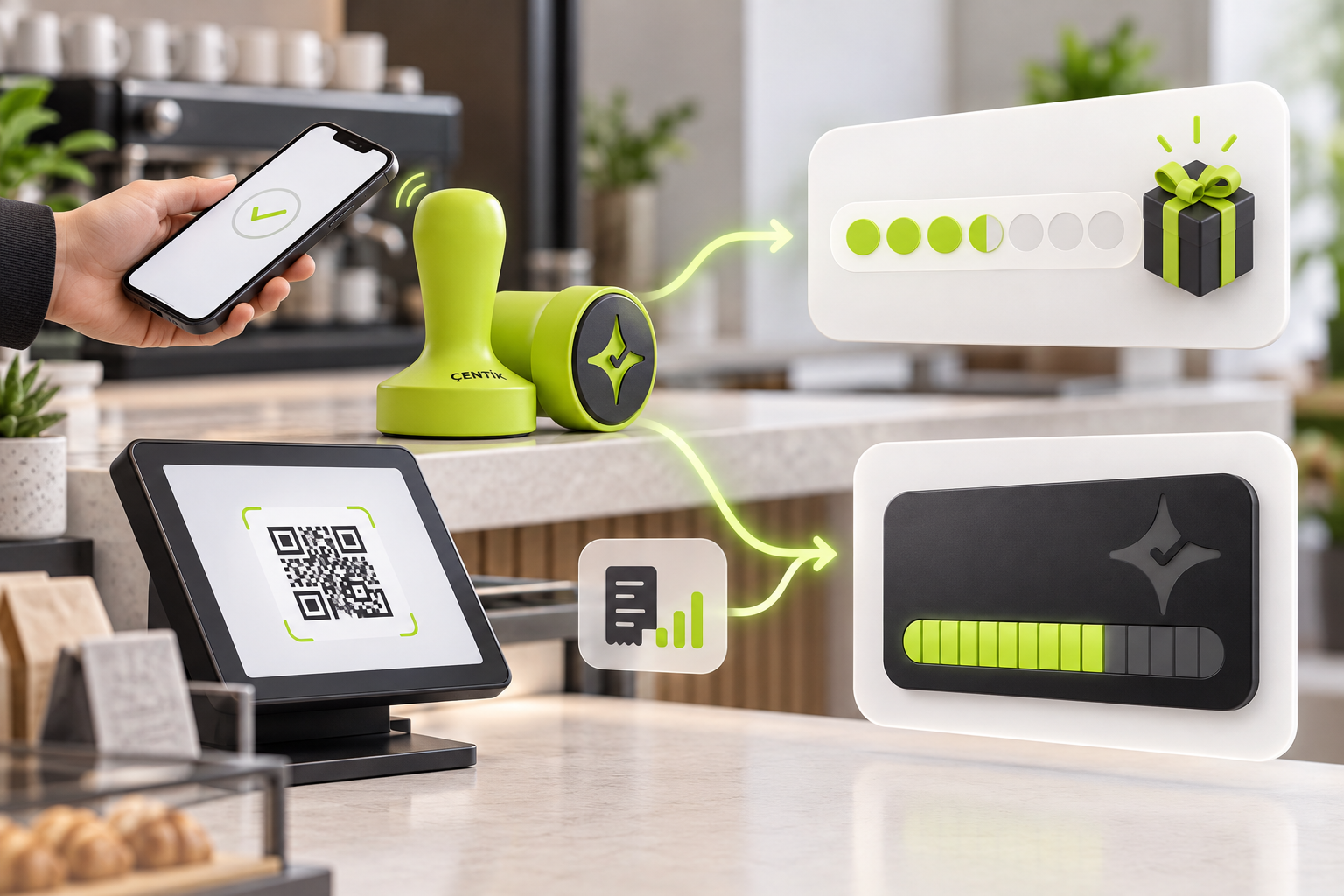
Çentik supports two distinct loyalty models: count-based rewards and balance-based rewards. With a count-based program, a customer accumulates qualifying counts or stamps toward an incentive determined by the business. With a balance-based program, the business can grant a loyalty balance through an eligible NFC or QR interaction. Both approaches can be used to encourage future visits.
For counter-based operations, a POS interface can display a QR code that grants either a reward count or a loyalty balance. The balance granted through the QR workflow can optionally depend on the amount received from the POS. This describes the supported reward-granting workflow, not universal compatibility with every POS product or automatic synchronization with third-party transaction systems. Businesses should confirm their specific setup and operational requirements before choosing a deployment.
Where Çentik Makes Sense
- Coffee shops that want regular customers to accumulate qualifying visits or purchases toward a reward.
- Bakeries and dessert shops that want digital loyalty without relying on paper punch cards.
- Independent hospitality businesses where counter interaction is an important part of the customer journey.
- Merchants interested in granting loyalty balances instead of using only fixed stamp milestones.
- Businesses seeking a published first-location subscription price and a focused loyalty workflow.
Çentik's limitations matter as much as its strengths. A business requiring advanced identity resolution, large-scale customer data enrichment, sophisticated enterprise segmentation, or extensive marketing orchestration should assess whether a specialized enterprise platform is more suitable. Similarly, a business depending on a particular POS integration should validate compatibility rather than assuming that a QR-based workflow provides a complete integration.
What Is Epsilon Loyalty?
Epsilon is a marketing technology company within Publicis Groupe. Its loyalty offering is part of a broader customer data and marketing ecosystem associated with Epsilon PeopleCloud. The company positions its loyalty platform around customer understanding, data enrichment, personalized experiences, AI-assisted decisioning, and configurable loyalty programs. Epsilon's relationship with Publicis Groupe is documented in Publicis's corporate reporting, which records the completion of its acquisition in July 2019.[1][2][5]
Epsilon's Loyalty Platform Capabilities
Epsilon's published product materials emphasize enriching first-party customer information, constructing more relevant member experiences, and using sophisticated data analysis to inform loyalty decisions. Its broader capabilities are relevant to organizations seeking deeper connections between loyalty activity and customer engagement across channels. The platform is more appropriately evaluated as a configurable loyalty management system than as a simple digital punch-card replacement.[1][2]
Epsilon has also received recognition in independent industry research. Forrester included Epsilon among the Leaders in its Q4 2025 evaluation of loyalty platforms, according to Epsilon's December 2025 announcement. That recognition supports Epsilon's standing in the evaluated market, but it does not establish that Epsilon will outperform every alternative for a particular business.[6]
Epsilon Starter, Standard, and Enterprise
Epsilon's product information identifies three offering levels. Starter is presented for smaller brands beginning with a more traditional loyalty program and includes shared hosting, self-service administration, and preconfigured options. Standard adds dedicated hosting, assisted program configuration, and additional reward capabilities. Enterprise is intended for more sophisticated programs and includes options for advanced support, complex integrations, and client-specific requirements. This breadth makes Epsilon relevant beyond only the largest organizations, although suitability and actual cost still depend on the proposed scope.[2]
In-Store NFC and QR Loyalty vs Enterprise Customer Engagement
The most practical distinction between Çentik and Epsilon is where each product concentrates its value. Çentik emphasizes an interaction a customer can complete during a physical visit. Epsilon emphasizes the broader information, decisioning, and program-management capabilities that brands can use to coordinate customer relationships. These approaches are not mutually exclusive in principle, but they solve different immediate problems.[1][2][3]
A Coffee Shop Loyalty Example
Consider an independent coffee shop that wants customers to return more frequently. It could use Çentik to offer a count-based incentive for qualifying coffee purchases or a balance-based program that accumulates loyalty value for future rewards. Customers interact with an NFC touchpoint or an eligible QR code, while the merchant defines the incentive. This is a practical example of the product's supported loyalty models rather than a guarantee of a particular revenue or retention outcome.
A Multi-Brand Loyalty Example
Now consider a company managing several retail brands and a large customer database. It may want to combine customer attributes, loyalty activity, segmentation, and personalized offers into a coordinated engagement strategy. Epsilon's data-oriented loyalty architecture and configurable offerings address that kind of requirement. Implementation scope, customer data permissions, and integration needs would need to be defined during the buying process.[2]
Çentik vs Epsilon Pricing in 2026
Çentik Pro costs $19.99 per month for the first location. This is a straightforward starting reference for businesses comparing the subscription cost of a focused loyalty product.[3]
Epsilon requires a more nuanced pricing comparison. Its official loyalty product page directs prospective customers toward a sales conversation rather than presenting a single public subscription price across all offering levels. A separate AWS Marketplace listing for Epsilon PeopleCloud Loyalty identifies a 12-month Loyalty Platform option starting at $30,000 and a separate pay-as-you-go dimension starting at $2,500. AWS describes pricing as dependent on contract duration and terms, and notes that additional infrastructure costs may apply. These are marketplace listing amounts, not a universal Epsilon price schedule.[2][4]
Because the two pricing models describe different offerings and contract structures, a simple monthly price ratio would be misleading. Epsilon buyers should request a proposal specifying licensing, implementation, service levels, integrations, data requirements, and potential additional charges. Çentik buyers should confirm any deployment-specific requirements beyond the first-location subscription.
What Should You Include in the Total Cost of Ownership?
- Subscription or contractual software fees over the intended purchasing period.
- Initial configuration, onboarding, and staff training.
- Any required counter hardware or customer-facing equipment.
- POS-related setup and compatibility requirements.
- Customer data migration and validation.
- Ongoing administration, campaign management, and support.
- Relevant integration, reporting, and security requirements.
Which Platform Is Better for Small Businesses?
For an independent coffee shop, bakery, or other visit-driven business, Çentik is generally the more focused option to evaluate first. Its NFC and QR workflows address customer loyalty at the point of interaction, and its count-based and balance-based reward models provide two practical ways to structure incentives. Its published first-location subscription also makes initial software cost easier to understand.
Epsilon should remain on the shortlist when a smaller or growing brand requires more sophisticated customer data capabilities, personalized loyalty journeys, or access to an offering that can evolve toward greater complexity. Epsilon explicitly markets its Starter tier to smaller brands, so business size alone should not determine the decision.[2]
Which Platform Is Better for Enterprise Loyalty?
Epsilon is better aligned with a requirements list centered on customer intelligence, sophisticated personalization, flexible program management, and complex integration needs. Its Standard and Enterprise offerings are designed to accommodate progressively more elaborate loyalty operations, while its broader PeopleCloud ecosystem provides context for data-driven marketing strategies.[1][2]
Çentik can still be considered when an organization's immediate requirement is a specific in-store reward interaction. However, organizations with extensive enterprise procurement, integration, security, and reporting requirements should evaluate those capabilities individually. A simple counter loyalty experience does not establish equivalence with an enterprise customer data and marketing platform.
Limitations and Trade-Offs
Potential Çentik Limitations
- The product's emphasis is on merchant-operated loyalty experiences rather than a complete enterprise marketing technology stack.
- Named POS compatibility and integration behavior must be confirmed for the business's existing setup.
- Complex enterprise personalization and identity-resolution requirements may call for additional systems or another platform.
- Businesses should establish the appropriate reward approval, balance-granting, and operational controls for their workflow.
Potential Epsilon Limitations
- The full commercial proposal may require consultation rather than selection from a simple public price list.[2][4]
- More sophisticated deployment options can introduce additional configuration, procurement, and integration considerations.[2]
- The reviewed public documentation does not establish a directly equivalent NFC touchpoint or counter-displayed QR experience.
- Smaller businesses should assess whether the value of advanced personalization and data capabilities justifies the complete implementation commitment.
Switching From Epsilon to Çentik: Migration Considerations
Moving from Epsilon to Çentik should not be treated as a direct replacement of every enterprise feature. Before switching, identify which capabilities are essential to the current loyalty program and which can be simplified. A business that primarily wants a count-based or balance-based in-store experience may be able to redesign its loyalty program around those mechanics. A business dependent on advanced identity management, multi-channel decisioning, or extensive marketing integrations should carefully assess what would no longer be covered.
Migration Checklist
- Inventory existing members, reward rules, balances, historical activity, and active campaigns.
- Identify which customer records and reward entitlements must be preserved.
- Confirm available export formats, contractual data access rights, and any applicable consent requirements.
- Determine whether the intended Çentik configuration can represent the existing program's reward logic.
- Verify data import options and required mapping procedures directly with the providers.
- Test the selected NFC or QR workflow at the actual service counter.
- Define how outstanding rewards and customer communications will be handled during the transition.
- Validate migrated data and reward entitlements before retiring the previous system.
This checklist is a migration planning framework, not a claim that Çentik offers an automated Epsilon migration tool. Data portability, import capabilities, contractual access, and compatibility should be confirmed before any migration commitment.
How to Choose Between Çentik and Epsilon
Start with the loyalty experience the customer should actually receive. If the goal is to reward repeat in-store visits through accessible NFC or QR interactions, a focused platform such as Çentik is a logical candidate. If the goal is to manage intricate loyalty journeys informed by enriched customer data and advanced decisioning, Epsilon deserves closer consideration. The best choice is the one that addresses the required workflow without adding unnecessary complexity or leaving critical capabilities unaddressed.
- Choose Çentik when NFC or QR-driven in-store loyalty is a central requirement.
- Choose Çentik when count-based rewards or loyalty balances are sufficient for the desired incentive structure.
- Evaluate Epsilon when customer data enrichment and sophisticated personalization are central purchasing criteria.
- Evaluate Epsilon when the program requires configurable enterprise support, hosting, and integration options.
- Request demonstrations from both providers using the same customer journey and operational requirements.
- Compare complete implementation costs rather than headline prices alone.
Frequently Asked Questions About Çentik vs Epsilon
What is the main difference between Çentik and Epsilon?
Çentik focuses on NFC and QR-enabled in-store loyalty, including count-based rewards and loyalty balances. Epsilon offers a broader loyalty management platform emphasizing customer data, personalization, AI-assisted insights, and configurable program infrastructure.[1][2][3]
Is Çentik cheaper than Epsilon?
Çentik Pro costs $19.99 per month for the first location. Epsilon's public AWS Marketplace listing includes a 12-month Loyalty Platform option starting at $30,000, but that offering has a different scope and contract structure. The figures are not directly equivalent, so a complete Epsilon proposal is needed for a meaningful comparison.[4]
Does Çentik support both stamp rewards and loyalty balances?
Yes. Çentik supports count-based or stamp-style rewards as well as balance-based loyalty. NFC or QR interactions can grant a qualifying count or loyalty balance.
Can Çentik grant a loyalty balance based on a POS transaction amount?
Çentik supports an optional QR workflow in which the balance granted can be based on the amount received from the POS. This does not establish universal POS compatibility, automatic synchronization, or payment-processing functionality.
Does Epsilon offer a loyalty platform for smaller businesses?
Yes. Epsilon describes a Starter offering for smaller brands, with shared hosting, self-service administration, and preconfigured program options. Suitability and commercial terms should be assessed with Epsilon.[2]
Does Epsilon support NFC loyalty devices like Çentik?
Epsilon's reviewed public product materials do not establish an equivalent NFC counter-device workflow. That does not mean the functionality is impossible through configuration or integration; prospective buyers should ask Epsilon about their specific NFC requirements.
Does Çentik replace Epsilon PeopleCloud?
Not on a feature-for-feature basis. Çentik addresses practical loyalty interactions and rewards, while Epsilon PeopleCloud is part of a broader data-driven marketing ecosystem. A replacement decision depends on which existing capabilities the business actually uses.[1][2]
Which platform is better for a coffee shop?
Çentik is a focused option for a coffee shop that wants customers to earn counts or loyalty balances through NFC or QR interactions. Epsilon may be appropriate for a coffee or restaurant brand that also needs more elaborate data-driven personalization, program management, and marketing coordination.
Can I automatically migrate Epsilon loyalty members and balances to Çentik?
An automatic migration path has not been established. Businesses should confirm Epsilon export access, Çentik import options, data mapping, reward entitlement handling, and customer communication requirements before planning a switch.
Which platform should a national retail chain consider?
A national retailer requiring advanced customer intelligence, configurable loyalty programs, and complex integration options should evaluate Epsilon closely. A retailer primarily looking for an in-store NFC or QR rewards experience can also assess Çentik, subject to its technical and operational requirements.[2]
Final Verdict: The Right Loyalty Platform Depends on the Job
Çentik and Epsilon address related but substantially different loyalty needs. Çentik is compelling for merchants seeking a focused in-store rewards workflow with NFC, QR, counts, and balances at a published first-location monthly subscription price. Epsilon deserves attention from brands seeking sophisticated loyalty management supported by customer intelligence, personalization, configurable offerings, and broader marketing technology. Neither platform is universally superior. The better investment is the one whose capabilities, operational demands, and total cost match the business's real loyalty objectives.
Turn More First Visits Into Repeat Visits With Çentik
Explore count-based rewards, loyalty balances, and NFC or QR-driven loyalty experiences for your business. See how Çentik could fit your counter workflow, starting with Pro at $19.99 per month for the first location.
Explore Çentik