
Çentik vs Paytronix: The Quick Answer
Çentik is worth considering for independent coffee shops, cafés, bakeries, and smaller restaurant groups that want to introduce digital loyalty through NFC or QR without making a POS integration a prerequisite. It supports count-based rewards, loyalty balances, customer management, campaigns, and repeat-visit tracking, with Pro priced at $19.99 per month for the first location. Paytronix is a stronger candidate when loyalty needs to operate alongside online ordering, sophisticated customer segmentation, omnichannel marketing, and an established integration ecosystem. Importantly, Paytronix also explicitly serves independent restaurants and groups with one to nine locations, so it should not be characterized as enterprise-only.[1][2][3][4]
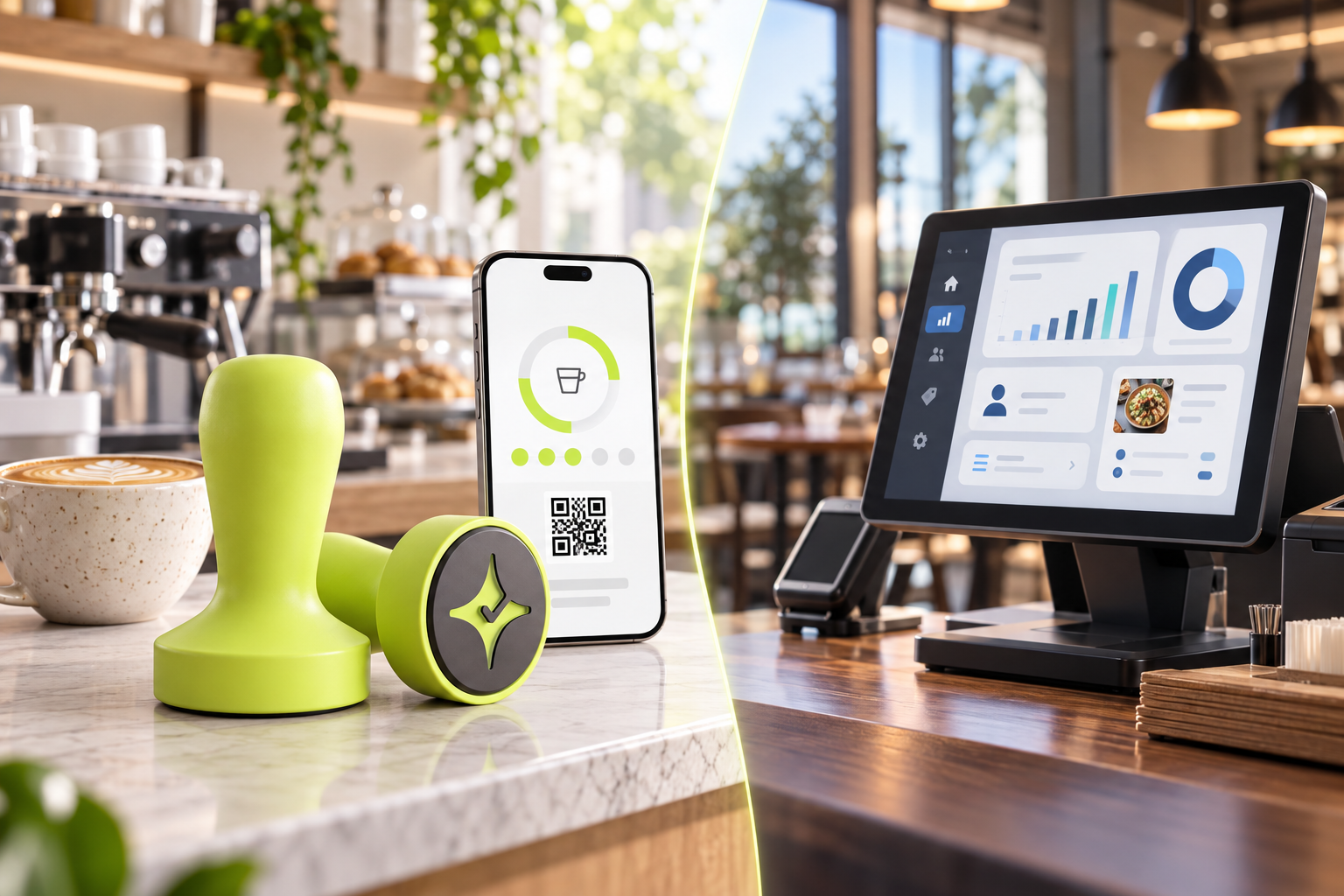
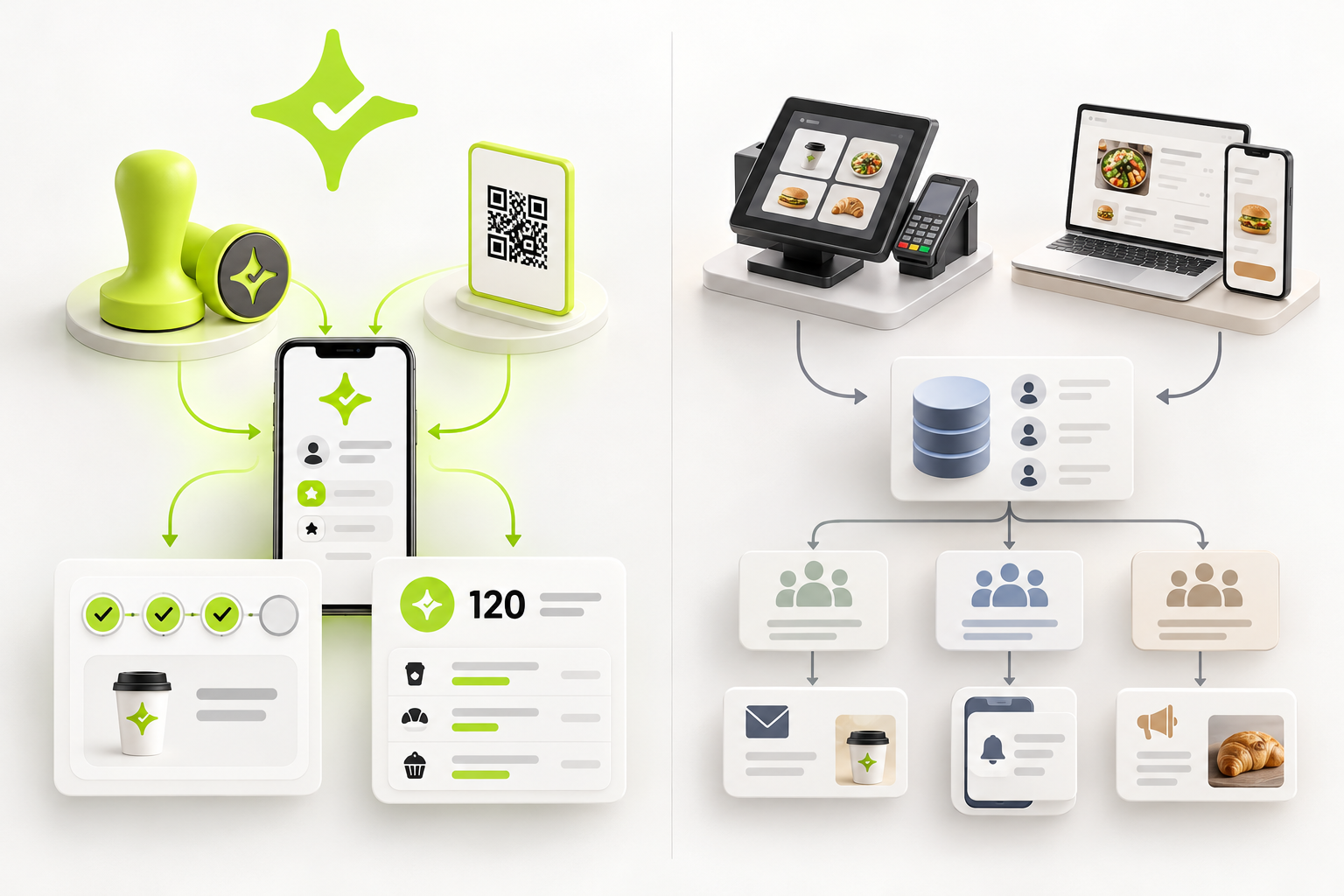
Çentik vs Paytronix: Feature Comparison
| Criterion | Çentik | Paytronix |
|---|---|---|
| Primary focus | Digital loyalty, repeat visits, and customer retention | Broad restaurant and convenience-store guest engagement platform |
| Best-fit starting point | Independent cafés, bakeries, and smaller hospitality operators | Independent restaurants, restaurant groups, multi-unit brands, and convenience stores |
| Loyalty earning | Count or stamp rewards and balance-based loyalty | Configurable loyalty programs based on customer activity, visits, and transactions |
| In-store interaction | NFC touchpoints, QR codes, and supported counter QR workflows | Multiple enrollment and identification methods, including POS and digital channels |
| Customer mobile app | No separate app download required for browser-based loyalty | Branded mobile app experiences are available; specific deployment requirements vary |
| Digital wallets | Apple Wallet and Google Wallet support | Digital and contactless experiences; specific wallet-pass requirements should be confirmed |
| POS integration | Not required for the core loyalty workflow; optional POS-informed QR balance flow | Extensive integration ecosystem, with compatibility dependent on the selected systems |
| Marketing | Customer management, segmentation, and loyalty campaigns | Advanced segmentation, messaging automation, and personalized customer journeys |
| Analytics | Customer activity, repeat visits, and loyalty performance | Customer insights, campaign measurement, transaction-oriented reporting, and analytics services |
| Online ordering | QR menu tools; no equivalent full ordering suite established | Online ordering and delivery capabilities |
| Gift cards and payments | No equivalent payment-processing or gift-card platform established | Gift-card, payment, and related engagement capabilities |
| First-location pricing | $19.99/month for Pro | Custom quote; no standard public monthly price established |
| Pricing process | Published subscription price | Contact sales for business-specific pricing |
| Deployment considerations | Can begin without connecting a POS | Scope, implementation, and integrations depend on the selected solution |
The distinction is primarily about product scope and operating model, not whether one platform is categorically better. Paytronix markets loyalty programs to both independent and multi-unit restaurants, and its broader suite incorporates tools beyond loyalty. Çentik emphasizes a narrower initial workflow: recognizing a customer, awarding a count or balance, and encouraging another visit. The published feature and pricing information supports this comparison, but it does not establish a like-for-like total cost or feature-equivalent deployment.[1][2][3][4]
How Çentik Loyalty Works
Çentik allows businesses to operate digital loyalty through NFC or QR interactions. Customers can access their loyalty experience in a mobile browser without installing a dedicated app, while supported Apple Wallet and Google Wallet experiences provide another way to access their cards. Businesses can choose count-based rewards, such as progress toward a complimentary drink, or balance-based loyalty arrangements. NFC or QR interactions can grant loyalty counts or balances according to the configured workflow.[3]
NFC, QR, and Counter-Based Loyalty
A business can use the physical Çentik NFC touchpoint or a QR-based interaction to update a customer's loyalty record. A supported counter workflow can also present a QR code through a POS interface to grant either a count or a loyalty balance. Optionally, the balance awarded through that QR flow can be calculated from an amount received from the POS. These capabilities should not be interpreted as universal POS compatibility, automatic transaction synchronization, payment processing, or a stored-money account. The loyalty balance is a program reward measure, and its rules depend on the business configuration.
Campaigns and Repeat-Visit Tracking
Çentik combines digital rewards with a business dashboard for customer records, repeat-visit analysis, and campaign management. Its published product information describes campaigns such as bonus stamps during quieter periods, birthday promotions, and reactivation offers. Its analytics focus on identifying returning customers and monitoring loyalty activity rather than reproducing the full transactional intelligence of a restaurant commerce platform.[3]
How Paytronix Loyalty Works
Paytronix positions loyalty within a wider digital guest engagement suite. Its platform brings together configurable loyalty programs, customer messaging, online ordering, digital experiences, and customer insights. Its loyalty offering supports enrollment through multiple touchpoints, including POS, SMS, apps, online channels, and email. The company also describes transaction-aware engagement, behavior-based offers, and personalized communication. These capabilities make Paytronix particularly relevant when a business needs loyalty data to inform ongoing marketing and operational decisions.[1][2]
Marketing Automation and Customer Insights
Paytronix offers a more extensive documented marketing environment, with segmentation, automated messaging, customer analytics, and campaign reporting. Its loyalty product page describes reporting on metrics such as visits, redemptions, and average spending. The platform also offers more advanced customer journeys and targeted promotions. For restaurants with dedicated marketing teams or complex customer lifecycle strategies, these capabilities may justify a more involved implementation. Actual availability should be confirmed against the modules included in a commercial proposal.[1][2]
Ordering, Integrations, and Multi-Unit Operations
Paytronix extends beyond rewards into online ordering, catering, digital gift cards, and payment-related services. It also advertises a substantial ecosystem of existing integrations. This breadth can be valuable for brands managing customer relationships across stores, websites, applications, and ordering channels. However, an advertised integration ecosystem does not mean every POS, ordering provider, or data field is available in every customer configuration. Restaurants should confirm specific integration availability, costs, and data behavior before selecting a deployment.[1][2]
Key Difference: In-Store Loyalty vs Connected Guest Engagement
The clearest difference is the level of infrastructure each product is designed to address. Çentik provides a direct route from an NFC or QR interaction to a reward count or loyalty balance, supported by customer-facing digital cards and a business dashboard. Paytronix approaches loyalty as part of a connected restaurant engagement system involving transactions, marketing, ordering, and customer data. Neither approach is inherently superior: the better choice depends on whether the business primarily needs a lightweight loyalty workflow or a broader operational and marketing platform.[1][2][3]
- Choose an NFC or QR-first approach when fast customer identification and simple reward earning are the main requirements.
- Consider transaction-connected loyalty when purchase details, ordering behavior, and advanced personalization are essential.
- Assess how customers will enroll, identify themselves, earn rewards, and redeem them during busy service periods.
- Separate the loyalty requirements from optional ordering, payment, and marketing functionality to avoid buying unnecessary complexity.
- Validate workflows with the existing POS and staff before committing to either platform.
Çentik vs Paytronix Pricing in 2026
Çentik Pro costs $19.99 per month for the first location. This provides a clear starting subscription price for operators evaluating a digital loyalty program. The amount should not be interpreted as a complete deployment estimate for every location configuration or a guarantee about optional services.
Paytronix follows a different purchasing model. Its official pricing page directs potential customers to contact its team for business-specific pricing rather than publishing a standard monthly subscription amount. G2 likewise does not currently provide a public price for Paytronix CXP. There is therefore no verified universal Paytronix monthly fee that can be compared directly with Çentik's subscription.[4][5]
What Should You Compare Beyond the Monthly Price?
- Recurring subscription costs and whether pricing changes by location, module, or usage.
- Implementation, onboarding, hardware, and staff-training costs.
- POS and ordering integration requirements, including any separately priced connector services.
- Messaging, campaign, and customer-data functionality included in the selected plan.
- Contract duration, renewal terms, cancellation requirements, and customer support arrangements.
- Data export, migration assistance, and the cost of changing platforms later.
A low advertised monthly price is useful, but the relevant purchasing metric is the total cost of operating the required workflow. Operators comparing Çentik and Paytronix should request complete, written pricing for their actual requirements rather than applying estimates derived from unrelated customer deployments.
Who Is Çentik Best For?
Çentik is a practical option for U.S. businesses that want customer rewards without building their loyalty program around a dedicated consumer app or a mandatory POS integration. Its combination of NFC, QR, count rewards, loyalty balances, and customer management can suit hospitality businesses where recognizing repeat customers is the primary objective.[3]
- Independent coffee shops introducing a digital alternative to paper punch cards.
- Bakeries, dessert shops, and quick-service operators rewarding repeat purchases.
- Businesses that want both visit or item counts and configurable loyalty balances.
- Operators that prefer a browser-based customer experience and optional wallet access.
- Smaller teams seeking an identifiable first-location subscription price.
- Businesses looking to launch loyalty separately from their existing POS.
Where Çentik May Not Be the Best Fit
Çentik may not meet the needs of an operator seeking a complete enterprise ordering and commerce environment, deeply integrated transaction-level marketing across numerous systems, or native payment and gift-card infrastructure. Its optional POS-informed QR capability should not be confused with Paytronix's broader integration ecosystem. Businesses with these requirements should validate Çentik's specific capabilities rather than assume that its loyalty tools replace an entire restaurant technology stack.
Who Is Paytronix Best For?
Paytronix is a compelling option for restaurant brands and convenience-store operators that want to connect loyalty to more extensive digital guest engagement activities. This can include customer segmentation, personalized messaging, online ordering, gift-card programs, analytics, and integration-dependent transaction data. Its own product materials explicitly address independent restaurants as well as multi-unit businesses, making operational requirements a better selection criterion than business size alone.[1][2]
- Restaurant groups coordinating loyalty across multiple locations and channels.
- Operators with dedicated marketing teams building segmented customer journeys.
- Brands connecting loyalty programs to ordering, gift cards, and customer engagement services.
- Convenience stores seeking customer engagement tools suited to their operating model.
- Businesses with established technology systems that require vendor-supported integrations.
- Organizations prepared to evaluate a tailored software proposal and implementation scope.
Where Paytronix May Be Less Suitable
Paytronix may be more than a small operator requires when the immediate goal is simply to replace paper loyalty cards with digital rewards. Its custom-pricing process also means that the starting cost is less transparent without speaking to sales. Implementation effort is not uniform across Paytronix deployments, however, and a smaller restaurant should not assume that the platform requires an enterprise-scale rollout. The right assessment is whether the proposed solution's added functionality creates enough business value to justify its specific cost and complexity.[2][4]
What Independent Reviews Say About Paytronix
Independent software-review platforms provide additional context, although their findings should not be treated as statistically representative of every deployment. G2's Paytronix CXP listing showed a 2.1 out of 5 rating from four reviews, while Capterra listed a 3.8 out of 5 rating from 13 reviews as of its September 30, 2026 update. The small review samples, differing reviewer populations, and differing moderation methods make direct score comparisons unreliable.[5][6]
Published reviews include positive comments about Paytronix's marketing visibility and customer engagement functionality, alongside complaints from some reviewers about support responsiveness, implementation, and interface usability. These are individual experiences, not independently verified evidence that such problems occur across all customers. A prospective buyer should evaluate current support arrangements, request a workflow demonstration, and seek relevant references.[5][6]
The available sources do not establish a comparable independent review sample for Çentik. As a result, no evidence-based winner can be declared for overall customer satisfaction or support quality.
Switching From Paytronix to Çentik: Migration Considerations
Switching loyalty platforms requires more than changing the customer-facing rewards screen. Existing points, balances, enrollment records, and reward liabilities may need careful treatment, particularly when the outgoing program has complex earning rules or integrations. Neither compatibility with Paytronix data exports nor automated migration into Çentik is established by the information reviewed here.
A Practical Migration Checklist
- Inventory existing loyalty rules, tiers, points, balances, pending rewards, and gift-card obligations.
- Request documentation of the available Paytronix export formats and contractual access rights.
- Confirm which customer attributes and reward records Çentik can import before promising continuity.
- Determine whether customer permissions and marketing preferences can lawfully transfer to the new workflow.
- Define a conversion policy for any existing points or balances; do not assume a direct numerical equivalence.
- Test enrollment, earning, redemption, duplicate-account handling, and staff authorization before rollout.
- Communicate any changes to customers and identify how outstanding rewards will be honored.
- Retain an appropriate reconciliation record and confirm cancellation and data-retention obligations with the outgoing provider.
For a business with substantial ordering, payment, or CRM integrations, replacing Paytronix may require additional systems beyond Çentik. A limited pilot focused on a single location or customer segment can help establish whether the desired loyalty experience is achievable without disrupting existing operations.
How to Choose Between Çentik and Paytronix
Start with the customer interaction rather than the software feature list. If the essential requirement is that a customer scans a QR code or taps an NFC touchpoint, earns a configured reward or balance, and can view progress without installing an app, Çentik closely matches that workflow. If the requirement includes transaction-driven segmentation, connected ordering, sophisticated campaign orchestration, and an integration-heavy technology environment, Paytronix deserves serious consideration.[1][2][3]
Five Questions to Ask During a Demo
- Can a first-time customer join and earn a reward during a normal checkout without delaying service?
- Can the system accurately support our specific count, purchase-based, or balance-based earning rules?
- Which parts of our workflow require POS integration, staff action, or an additional device?
- Can we measure repeat visits and reward redemptions in a way that supports business decisions?
- What will implementation, continued operation, customer support, and eventual data export actually cost?
Final Verdict: Çentik or Paytronix?
For an independent coffee shop or smaller hospitality business prioritizing straightforward digital loyalty, Çentik offers a focused combination of NFC and QR interactions, count and balance rewards, customer management, and a clearly stated $19.99 monthly first-location price. It is particularly relevant when an existing POS can remain in place without becoming a dependency for the core loyalty experience.
For an operator seeking a broader restaurant guest engagement platform, Paytronix has a stronger documented offering in connected ordering, marketing automation, customer analytics, and integrations. Its potential advantages are most relevant when those additional capabilities are genuinely required. Paytronix's custom pricing means the financial comparison must ultimately be made against a written proposal rather than an assumed subscription cost.[1][2][4]
The most useful decision is not which platform has more features, but which one delivers the loyalty experience your business needs without introducing unnecessary operational work.
Frequently Asked Questions
Is Çentik a Paytronix alternative?
Yes, for businesses primarily seeking digital loyalty and repeat-customer engagement. Çentik offers NFC and QR-based loyalty, count and balance rewards, customer management, and campaigns. It is not a feature-for-feature replacement for Paytronix's broader ordering, payment-related, gift-card, integration, and marketing suite.
How much does Çentik cost compared with Paytronix?
Çentik Pro costs $19.99 per month for the first location. Paytronix does not publish a standard monthly price on its official pricing page; businesses are directed to request a tailored proposal. A verified like-for-like total cost comparison is therefore unavailable without obtaining a Paytronix quote.[4]
Does Çentik only support stamp cards?
No. Çentik supports both count or stamp-based rewards and balance-based loyalty. NFC and QR interactions can grant counts or balances according to the business's configured rewards workflow.
Can Çentik use a POS-generated QR code?
Yes, through a supported counter workflow in which a POS interface displays a QR code that grants a count or loyalty balance. Optionally, a balance awarded through that QR flow can be calculated using an amount received from the POS. This does not imply compatibility with every POS, automatic synchronization, or payment processing.
Does Çentik require customers to download an app?
No. Customers can access Çentik's digital loyalty experience through a browser. Çentik also supports Apple Wallet and Google Wallet access for supported digital cards.[3]
Does Paytronix work for independent restaurants?
Yes. Paytronix explicitly markets loyalty solutions to independent restaurants and restaurant groups with one to nine locations, as well as larger multi-unit operators. Its suitability depends on the features required, the quoted price, and the implementation scope.[2]
Is Paytronix better for marketing automation?
Paytronix has a broader publicly documented marketing automation offering, including customer segmentation, personalized messaging, connected customer insights, and campaign measurement. Çentik also offers customer management and loyalty campaigns, but the two platforms are not equivalent in documented marketing depth.[1][2][3]
Does Paytronix require a branded mobile app?
Not necessarily. Paytronix documents multiple ways for customers to enroll and identify themselves, including POS, SMS, online, and app-based methods. Whether a particular deployment requires a branded application should be confirmed with Paytronix.[2]
Can a restaurant switch from Paytronix to Çentik?
A restaurant can evaluate Çentik as a replacement for some or all of its loyalty workflow, but automatic migration and direct compatibility with Paytronix data have not been established. Existing customer records, reward balances, integrations, and contractual obligations should be evaluated before switching.
Which loyalty platform is better for a coffee shop?
Çentik is worth evaluating first if the coffee shop wants NFC or QR loyalty, digital rewards, and repeat-visit tracking without a mandatory POS integration. Paytronix may be more suitable if the shop also needs connected ordering, advanced customer marketing, and broader system integration. The best choice depends on the actual workflow and total cost.
Make Every Visit Count With Çentik
Turn everyday customer visits into opportunities for repeat business. Explore NFC and QR loyalty, count-based and balance-based rewards, digital cards, and customer insights with Çentik Pro at $19.99 per month for your first location.
Explore Çentik